The Nonprofit Engagement Strategy Playbook
If you're a Development Director, Volunteer Coordinator, Engagement Manager, or Executive Director at a nonprofit, here's the version of your job description nobody put on paper: you're responsible for getting people to show up.
Not just give. Not just open the email. Show up. Stay engaged. Bring a friend next time. Care enough about the work that they'd notice if you stopped doing it.
That's harder than it sounds, and it's a different problem than most nonprofit marketing assumes. Most engagement playbooks are really transaction playbooks in a different font. They optimize for the donation, the registration, the open rate, the click-through. The metrics get prettier. The relationships do not.
The nonprofits that build something durable understand something most don't: their job is participation, not transactions.
The transaction is what happens when participation works. Reverse the order and everything gets harder.
This playbook is built on that shift. It draws from what we've watched real nonprofit teams do well, including parks systems that turned anniversary years into four-year engagement programs, foundations that built belonging into AI bootcamps, healthcare nonprofits that designed participation around clients usually excluded from "engagement" entirely. Below you'll find the diagnostic (what transaction thinking looks like in disguise), the patterns (what participation-first looks like across the supporter lifecycle), the design question (who gets included, and who quietly gets left out), the strategic shifts, what to measure, and where to start.
Why Most Engagement Strategies are Transaction Strategies in Disguise
Here's the test. Look at the last engagement campaign your team ran. What did you measure?
If the headline number is "donations," "registrations," "opens," "clicks," "signups," or "attendance," you measured transactions. None of those numbers tell you whether anyone genuinely participated. They tell you whether anyone took the single discrete action you asked them to take. That's a transaction. The two are not the same.
Real participation looks different. A supporter who completed three Missions in your campaign, then shared one of them with a friend, then came back the next month for the follow-up campaign, that person participated. The donor who clicked through a year-end appeal email and gave $50 transacted. Both matter. Only one compounds.
The trap is that transaction metrics are easier to measure, easier to report up, and easier to build campaigns around. Your board doesn't ask about participation. They ask about revenue. Your CRM is built to track gifts, not engagement quality. Your annual report celebrates the transaction milestones because that's what nonprofits have always done.
But the orgs that build something durable have learned to look at the second-order numbers. Did this campaign produce participants who came back? Did the people who showed up bring others? Did the engagement create assets (stories, photos, advocates, testimonials) we can use beyond the campaign itself? Did the program work better this year than last year? Those are participation metrics. They're the ones that compound.
The good news: you don't have to throw out the transaction metrics. The board still wants the revenue number. The question is whether the campaign you ran also produced participation, or whether you optimized for one and got nothing else. Transaction-first programs produce transactions and stop. Participation-first programs produce both.
What Participation-First Looks Like Across the Supporter Lifecycle
The supporter lifecycle is the same in every nonprofit, regardless of mission: people show up new, become recurring, sometimes lapse, sometimes come back. The participation-first approach has a different shape at each stage. Four patterns worth knowing.
First-Time Supporters
The first 30 days after someone joins your community is the most important window for retention, and the most commonly wasted one. Most nonprofits welcome new supporters with a thank-you email and a request. The orgs that retain them treat the first month as an onboarding sequence.
The pattern: meet the team, see the impact, hear from a current beneficiary, contribute something small and specific, get celebrated for it. The transaction (the first donation, the first volunteer shift) becomes a step in the relationship, not the relationship itself. Our refreshed guide to volunteer orientation walks through what this looks like for volunteer programs specifically, but the same principle applies to donor stewardship, member onboarding, and new program participants.
Recurring Supporters
Once someone is committed to your mission, the work changes from acquisition to deepening. The temptation here is to keep asking for more (more donations, more shifts, more time). The pattern that works is the opposite: give them more ways to participate that don't require giving more.
Behind-the-scenes campaigns. Tribute recognition that turns a memorial gift into a relationship. Peer-to-peer programs where committed supporters bring others. Each of these creates participation without an ask. The Forest Preserve District of Will County's Take It Outside Challenge is the clearest example of this pattern at scale: 80%+ completion rate in year four, with participants who started as casual visitors and became program ambassadors.
Lapsed Supporters
Most lapsed-supporter outreach is a transaction in disguise: a single email asking for a renewed gift. The participation-first version invites them back into the mission without an ask. Show what's changed. Reintroduce the people doing the work. Share wins they missed.
The renewed gift, if it comes, comes second. The teams that get this right understand that lapsed doesn't mean lost. It means deprioritized, and the path back is participation, not pressure.
Advocacy Supporters
The cleanest example of participation-first thinking is advocacy work, because there's no transaction at all. There's only participation. Holes in the Wall Collective's Climate Action NYC campaign asked participants to write a "love letter to the Department of Environmental Protection." No donation. No registration. Just a small concrete act that turned a climate-curious New Yorker into a climate-engaged one. The Mark Cuban Foundation's AI bootcamps work the same way: the program isn't a transaction. It's a series of small participatory acts that build identity and belonging.
When the work is to change minds, participation is the only path. Transactions don't change anyone's mind.
Designing Participation for Everyone, Not Just the Audiences Most Engagement Programs Assume
Here's a quiet truth about most nonprofit engagement content: it's written for buyers who serve able-bodied, tech-fluent, English-speaking, broadband-having audiences. The advice scales beautifully if your supporters look like the typical marketing case study. It scales poorly otherwise.
Real nonprofit audiences include adults with intellectual and developmental disabilities, older adults less comfortable with smartphones, families with young children where attention is fractured, supporters whose first language isn't English, low-income communities where data plans are precious, rural communities where connectivity is uneven. Most engagement programs quietly exclude all of them.
The orgs designing for participation rather than transactions take inclusion as a design problem, not a footnote. BAYADA Home Health Care is the best example we've seen. Their clients are adults with intellectual and developmental disabilities. The state requires BAYADA to support those clients in working toward Individual Service Plan goals: social skills, community exploration, vocational discovery, responsibilities like recycling. Important goals. Also goals that, run as "engagement programs," would normally exclude this audience entirely.
BAYADA's Merrie Monarch Mission
The team's solution wasn't to dumb the program down. It was to redesign the unit of participation. Teams were built around staff supporting clients, with each team named after a client's initials. The Missions were the same Missions anyone else would get, designed thoughtfully to work for the audience as it was. Recycling. Collecting business cards from local shops. A hula performance recorded on camera. ISP goals quietly met while everyone was laughing. Four teams finished every Mission four days early. Read the full BAYADA case study for the detail.
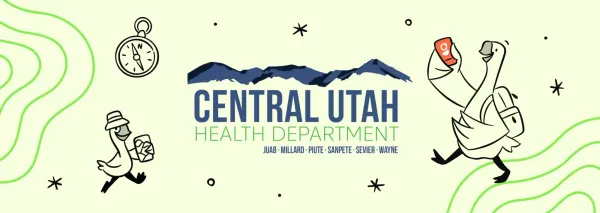
The Central Utah Health Department's Summer Health Challenge is another version of the same design principle, applied to a different audience. CUHD serves 18,000 square miles across six rural Utah counties, where the nearest district office can be a 320-mile round trip for many families. Rather than build programming that required families to come to them, they designed Missions families could complete from wherever they happened to be: photos at the farmer's market, videos of seatbelt use, walks and bike rides in their own neighborhoods. 217 families generated 3,417 submissions across the six counties in a single summer. The audience traditional health programming would have excluded became the audience the program was built for.
The principle generalizes. If your engagement program assumes the audience can use a smartphone independently, you've excluded older adults and clients with disabilities. If your program assumes English fluency, you've excluded supporters who'd participate enthusiastically in their first language. If your program assumes reliable broadband, you've excluded rural and lower-income communities your mission may exist to serve.
The teams that design inclusively don't sacrifice participation rates. They unlock them. The audiences other programs exclude are often the ones most eager to show up.
The Three Shifts That Separate Compounding Programs From One-Off Campaigns
A participation-first approach is a design philosophy. The teams that operationalize it well make three concrete shifts.
Shift 1: From the Campaign to the Program
The first shift is mental. Stop thinking in campaigns (one-off pushes with a start date, an end date, and a recovery period before the next push). Start thinking in programs (continuous engagement infrastructure that hosts campaigns inside it).
This matters because the math on engagement only works at the program level. A single campaign that drove 200 participants is a moderate success. The same 200 participants showing up for four consecutive campaigns is a program. The program is what compounds. The campaign is what feeds it.
Shift 2: From the Format You Have to the Format Your Audience Uses
Most engagement programs are built around the format the team is comfortable with: email, social, in-person event, broadcast. The participation-first move is to build around the format the audience will engage with most readily. That's almost never email.
Real participation increasingly happens through mobile-first, interactive, social formats that meet people where their attention already is. The PBS case study illustrates this well: pledge drives reached the audience the team was used to reaching, but interactive Experiences reached the audience the team needed to engage. The format wasn't a small choice. It was the whole game.
For nonprofit teams evaluating what format fits their audience, our buying guide for nonprofit engagement platforms walks through the six questions worth asking before you commit.
Shift 3: From Annual Planning to Compounding Infrastructure
The third shift is operational. Build engagement programs that are easier to run in year two than year one. Easier in year three than year two. The teams that get this right invest in templates, content libraries, repeatable structures, and institutional knowledge that survives team turnover.
The compounding test is simple: if your most experienced engagement person left tomorrow, could the program continue? If yes, you have infrastructure. If no, you have a campaign with a person attached, and that's an exit risk dressed up as a strength.
For specific patterns nonprofit teams use to make engagement compound across programs, our roundup of five nonprofits getting community engagement right shows the pattern across very different organizations and missions.
What to Measure
The hard part about measuring participation isn't the math. It's the discipline to measure the things that matter rather than the things easiest to report.
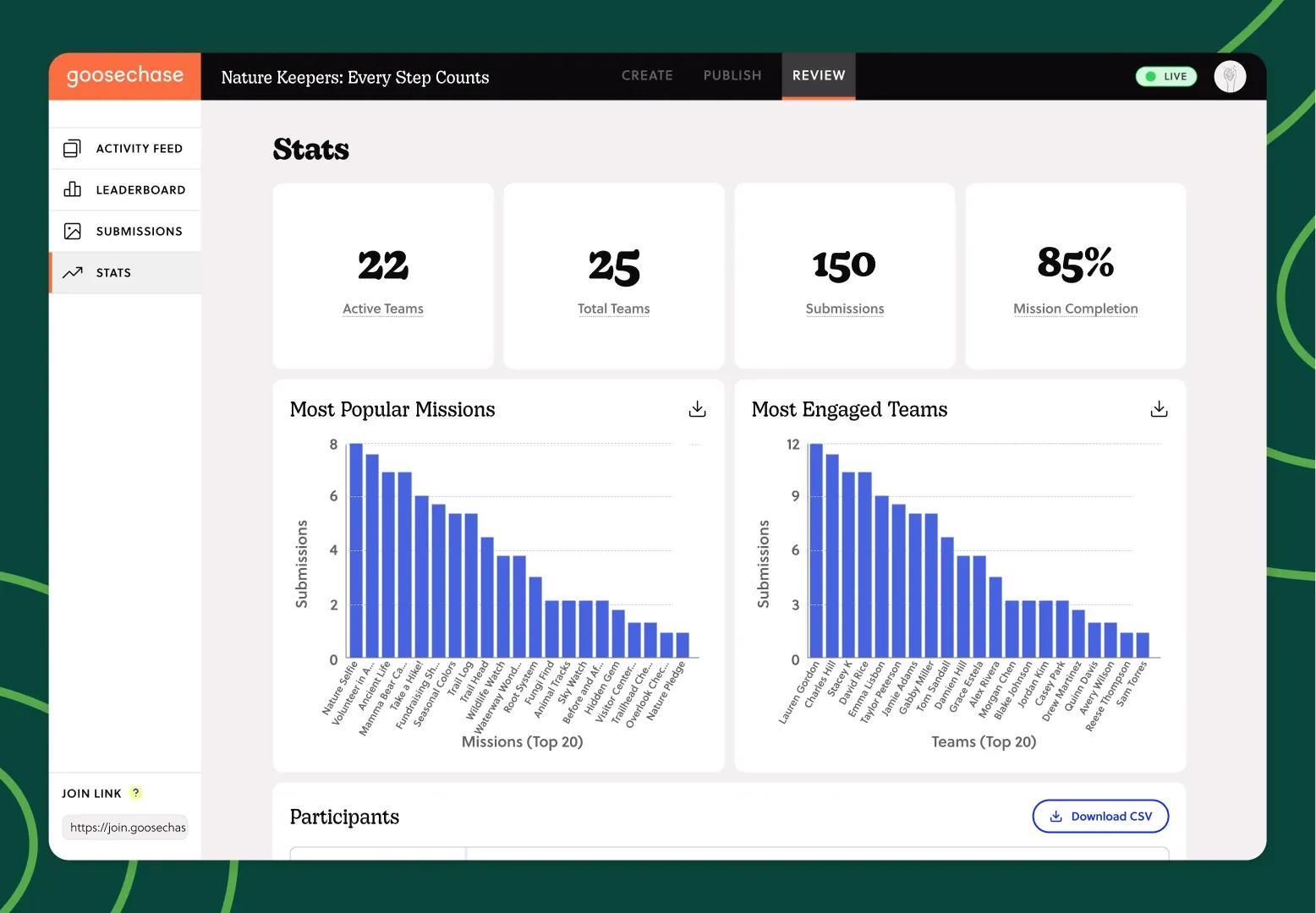
Four metrics worth tracking for any engagement program:
- Participation depth. Not just attendance, but how many actions each participant took. A 1,000-person campaign where each person did one thing is weaker than a 400-person campaign where each person did four things.
- Repeat participation. Of the people who showed up this quarter, how many also showed up last quarter? This is the metric that proves the program is working as a program, not a one-off.
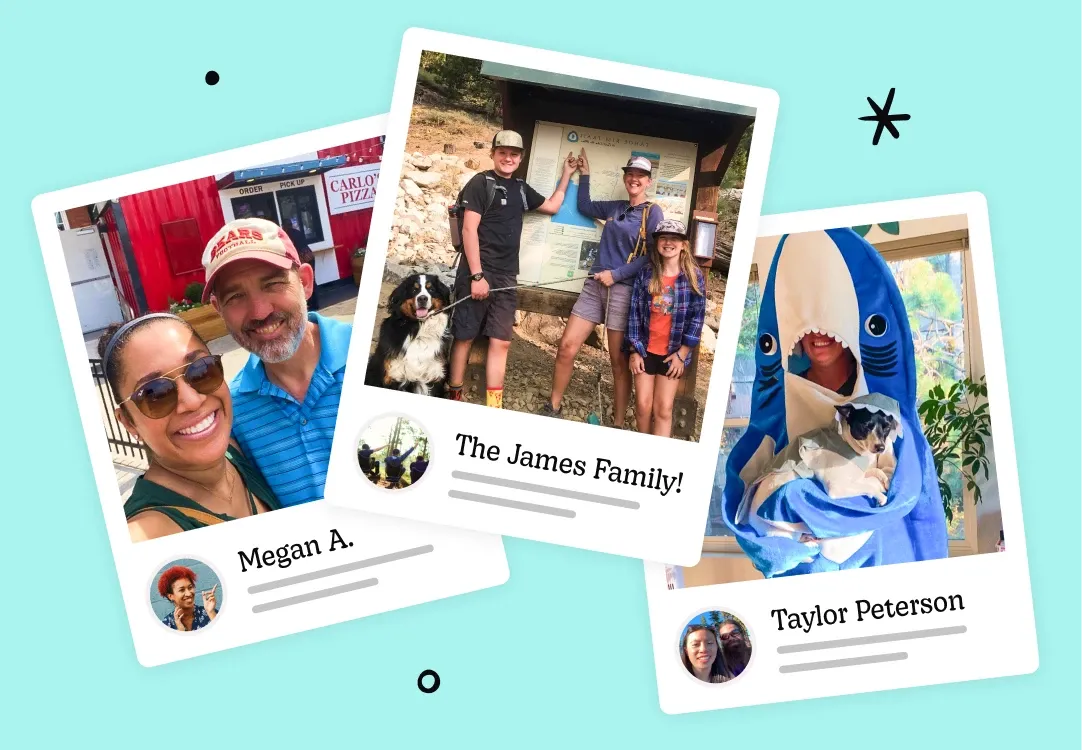
- Generated assets. Photos, videos, stories, testimonials, advocate moments. The teams that get this right treat every campaign as a content-production engine that pays for itself.
- Compounding signals. Does this year's campaign launch faster than last year's? Is the team smarter than they were? Are participants bringing others without being asked?
The orgs that compound treat each campaign as a test, not a final answer. What worked, what didn't, what to try differently next time. The transaction metrics still matter for board reporting. The participation metrics tell you whether the program is building something durable.
For a deeper read on tactical engagement patterns worth experimenting with, see our 21 interactive engagement ideas for nonprofits.
Where to Start
If you've read this far and the participation-first framing makes sense, here's how to move from "this is interesting" to "this is what we do now."
This week: Audit your last engagement campaign honestly. What did you measure? What did you optimize for? Where did the transaction thinking sneak in, even when the strategy doc said something different? You're looking for the gap between what your team says it cares about and what your campaign metrics rewarded.
This month: Pick one upcoming campaign and run it as a participation-first program. Same audience, same general goal, different structure. Build it for repeat participation rather than peak attendance. Design for the audience you have, not the one you wish you had. Set up the measurement to track depth, not just count. If that campaign is a fundraising event, our 17 fundraising event ideas for your nonprofit walks through participation-designed event formats worth trying.
This quarter: Have the internal alignment conversation. The participation-first approach requires the team's understanding (and ideally your executive director's and board's) that the metrics will look different and the campaign rhythms will change. The shift is often slower than the work itself because organizations have to learn to count differently. The development directors and engagement managers who succeed at this almost always start by getting their leadership team aligned on what success looks like before launching the first program. A 20-minute conversation now saves three months of explaining later.
The teams that do this don't immediately leave transaction thinking behind. They just stop being limited by it.
If you'd like to talk through what a participation-first program could look like for your specific mission, book a conversation with our team. No pitch deck. Just a working conversation about what fits.
Where to Go Deeper
This playbook is the strategic frame. The cluster around it goes deeper on specific tactics, decisions, and examples:
- 21 interactive engagement ideas for nonprofits: tactical patterns across community activation, volunteer engagement, donor stewardship, fundraising, and advocacy
- Choosing an engagement platform for your nonprofit: the six questions to ask when you're evaluating tools
- What 5 nonprofits get right about community engagement: case study patterns across PBS, Mark Cuban Foundation, Forest Preserve District, Climate Action NYC, and BAYADA
- Volunteer orientation: a practical guide to onboarding that improves retention: the supporter onboarding deep-dive
- How public institutions build community engagement that lasts: how parks systems, libraries, museums, public health departments, and civic engagement teams design for participation
If you want to see what a participation-first Experience looks like in practice, start a free Goosechase Experience. No credit card, no commitment.