21 Interactive Engagement Ideas for Nonprofits That Drive Real Participation
Most nonprofit engagement ideas you'll find online fall into one of two buckets. Either they're generic ("post on social media more often") or they're so specific to one organization's story that they don't transfer. Neither is useful when you're staring down a planning meeting trying to figure out what to do next quarter.
The 21 ideas below are grouped into five categories: community activation, volunteer engagement, donor stewardship, fundraising and giving, and awareness and advocacy. Skip to whichever section serves the program you're planning. The underlying principle threading all of them together is the same: when you turn passive audiences into active participants, engagement compounds. (We've drawn the examples below from real nonprofit programs we've watched succeed on Goosechase, but most of the ideas transfer to whatever tools your team already uses.)
Community Activation
These ideas help you bring your community closer to your mission through participatory, real-world experiences. Best for nonprofits with public-facing programs, member organizations, and any team trying to move people from awareness to action.
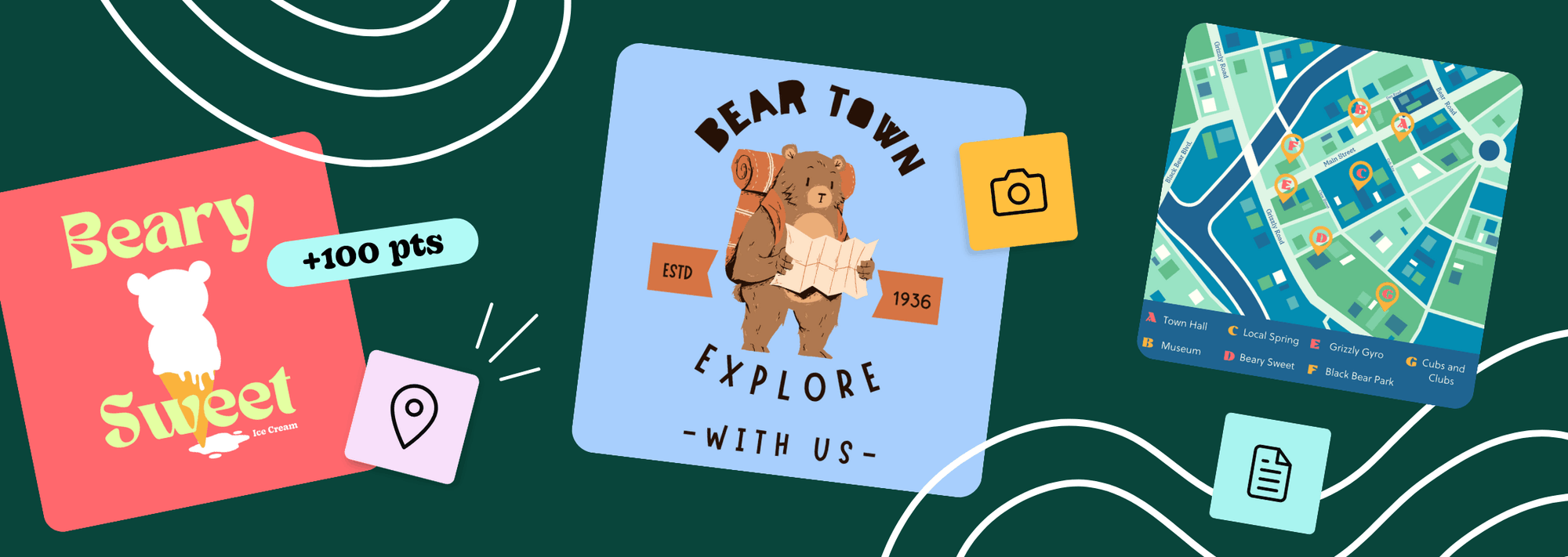
1. Design a "Discover Your City" Scavenger Hunt with Local Partners
What it looks like: Partner with local businesses, museums, or other nonprofits to create a multi-stop scavenger hunt that drives foot traffic to each. Each partner contributes one challenge. Participants complete the full set to enter a drawing or earn recognition. Your community gets a new way to explore, partners get visibility, and your nonprofit becomes the connector.
A way to start: Reach out to three local partners who would benefit from cross-promotion. Ask each one for a single challenge they'd love their community to discover. The first version only needs three stops to test the concept. Example challenge from a partner bookstore: "Find the staff pick shelf on the second floor and take a photo of the book that catches your eye most. Tell us in one sentence why."
Best for: Community foundations, chambers of commerce, downtown business associations, regional tourism nonprofits.
2. Turn a Single Signature Event into an Extended Engagement Window
What it looks like: If your nonprofit runs an annual gala, walk, race, poker run, or festival, the engagement opportunity doesn't have to end at sundown. Open a parallel challenge two weeks before the event, keep it running for a week after. Pre-event tasks build anticipation. Post-event tasks extend the relationship. You turn a four-hour event into a three-week program.
A way to start: Look at your next big event on the calendar. Identify three things attendees do before (register, plan their outfit, share with friends) and three things they do after (post photos, follow up, decide whether they're coming back). Each of those becomes one task in the sequence.
Best for: Annual gala organizers, walk/run coordinators, festival teams, conference hosts.
3. Build a Multi-Location Community Exploration Campaign
What it looks like: Send participants to specific places: historic sites, member businesses, partner organizations, public art, hidden gems in your service area. Each location becomes a stop on a self-guided journey. Holes in the Wall Collective used this approach for Climate Action NYC, connecting all five boroughs through a single ongoing scavenger hunt during Climate Week NYC.
A way to start: Map five locations within a 30-minute drive of your main office that connect to your mission. Sketch one prompt per stop that asks participants to notice something specific when they visit.
Best for: Community foundations, neighborhood associations, advocacy groups, tourism boards, cultural organizations.
4. Run an Inclusive Program That Meets Clients Where They Are
What it looks like: Engagement programs aren't just for the able-bodied and tech-savvy. With the right team design, interactive challenges can serve people with intellectual and developmental disabilities, older adults, families with young children, and anyone else your mission supports. BAYADA Home Health Care designed a campaign around team-based participation, where staff supported clients through missions that quietly delivered on state-mandated engagement goals while feeling like play. Read the BAYADA case study →
A way to start: Identify two or three goals your clients work on every day that could be reframed as small, fun tasks. The point isn't to make therapy gamified. It's to find the moments where joy and goal-progress can coexist.
Best for: Disability services, senior care, healthcare-adjacent nonprofits, community inclusion programs.
5. Run a Year-Long Anniversary or Milestone Challenge
What it looks like: Pick a meaningful milestone (your organization's 50th anniversary, a 90-year program, a 100,000-member moment) and build a year-long campaign around it. Participants complete small missions tied to your story, your locations, your community impact over months instead of a single event. The Forest Preserve District of Will County did this with the Take It Outside Challenge, which is now in year four with 80%+ participation rates.
A way to start: Pick three places, moments, or stories from your nonprofit's history that most of your community has never heard. Build the first month of the campaign around prompting people to visit, learn about, or share them.
Best for: Parks, conservation districts, member organizations, museums, libraries, faith communities.
Volunteer Engagement
These ideas help you recruit, onboard, train, and retain volunteers more effectively. Best for any nonprofit whose mission depends on a volunteer workforce.

6. Gamify Volunteer Onboarding
What it looks like: Instead of a 90-minute orientation slideshow, build the same content into a self-paced onboarding journey that new volunteers complete over their first week. They learn your mission, meet team members, tour facilities, and find their first task by completing small challenges on their own time. See our deeper guide on volunteer orientation here.
A way to start: List the five things every new volunteer needs to know in their first week. Write each one as a small task they could complete in five minutes or less, then string them together as the new onboarding sequence. Assign points for completion, add prizes, make it fun!
Best for: Any nonprofit with regular volunteer onboarding, especially those with rotating cohorts.
7. Recognize Volunteers Through a Celebration Campaign
What it looks like: During Volunteer Appreciation Week, or any moment you'd normally send a thank-you email, run a campaign instead. Volunteers complete missions that double as recognition: share a favorite memory, celebrate a teammate, recall the moment they knew this work mattered. The activity feed becomes a visible monument to their contribution.
A way to start: Reach out to three volunteers whose stories you wish more people knew. Ask if they'd share something brief as a sample post to kick off the campaign. Their participation gives others permission to share too.
Best for: Established volunteer organizations, faith communities with active service teams, advocacy nonprofits with volunteer field organizers.
8. Run a Volunteer Skill-Building Challenge
What it looks like: Use a multi-week campaign to help volunteers level up in specific skills your mission requires: public speaking, donor outreach, advocacy basics, technical certifications. Each step is a small learning task. Completion unlocks recognition or new responsibilities.
A way to start: Pick the single skill your volunteers most often ask for help with. Break it into five 10-minute learning steps. Build those steps into the first version of the challenge, and add more skills over time.
Best for: Advocacy nonprofits, organizations training community organizers, volunteer-led service programs.
9. Bring Remote Volunteers into the Community
What it looks like: Some of your most committed supporters may live far from your physical location. A campaign designed for remote volunteers gives them ways to engage from anywhere: sharing their advocacy on social, completing virtual training, writing letters to legislators, fundraising in their own networks. They contribute without needing to drive in.
A way to start: Find the five most committed remote supporters in your database. Ask them what they wish they could do to help that they can't currently do from where they live. Those answers become the challenges.
Best for: National nonprofits, advocacy organizations, mission-driven membership groups.
Donor Stewardship
These ideas help you build relationships with existing donors that go beyond the transactional ask. Best for nonprofits looking to improve donor retention and deepen long-term relationships.
10. Create a Donor "Behind the Scenes" Campaign
What it looks like: Build a campaign exclusively for current donors that lets them see what their giving funds. Site visits, virtual tours, conversations with program staff, glimpses of clients (with permission), behind-the-scenes moments. Donors see the work, the people, and the impact, not the next ask.
A way to start: Identify three things donors regularly ask about ("where does my money go," "how do you measure impact," "what's a story I haven't heard"). Build the first three missions around answering those questions.
Best for: Mid-size to large nonprofits with active donor bases, organizations stewarding major donor relationships.
11. Run a Peer-to-Peer Giving Recognition Campaign
What it looks like: When donors give in honor of someone (a memorial, a tribute, a birthday gift), turn the recognition into a shareable moment. A campaign lets the honored person see the gifts coming in, share what their work meant, and reach out to thank donors. The recognition becomes a relationship, not a receipt.
A way to start: Pull a list of the tribute gifts you've received in the past year. Reach out to three honored recipients and ask if they'd be willing to share something brief with the donors who gave in their name. Build the campaign around their stories.
Best for: Nonprofits with active tribute-giving programs, schools and universities, healthcare foundations.
12. Welcome New Donors with an Immersive First-Month Sequence
What it looks like: A new donor's first month is the most important window for retention. Use a multi-step campaign to introduce them to your mission, your team, and the work their gift made possible. Each task is a small step deeper into the relationship: meet the program director, see the first project funded, hear from a client.
A way to start: Look at the last five donors who gave for the first time. What would you want each of them to know, see, or hear in their first 30 days? Each of those becomes one step in the welcome sequence.
Best for: Any nonprofit running an annual giving program with new-donor flow, faith communities with active stewardship teams.
13. Re-Engage Lapsed Donors with a "We Miss You" Campaign
What it looks like: Lapsed-donor outreach normally takes the form of a single email asking for a renewed gift. A campaign can do something more interesting: invite lapsed donors back into the mission without asking for money. Show them what's changed since they last gave. Share new wins. Reintroduce the people doing the work. The renewed gift, if it comes, comes second.
A way to start: Identify three program updates from the last two years that lapsed donors probably haven't heard about. Build the campaign around sharing one update per week, with challenges inviting lapsed donors to respond, not give.
Best for: Mid-to-large nonprofits with annual giving programs, schools and universities with alumni databases.
Fundraising and Giving
These ideas help you turn fundraising into something interactive and participatory. For a deeper dive on fundraising-specific event ideas, see our guide to fundraising event ideas for your nonprofit. This section covers the highlights and complements it.

14. Run a Gamified Peer-to-Peer Fundraising Campaign
What it looks like: Instead of a flat peer-to-peer page, give fundraisers small challenges that drive participation in their networks. Sharing the campaign on social, recruiting a friend to join, hosting a virtual coffee chat about the cause, reaching a fundraising milestone. The campaign becomes a community of fundraisers cheering each other on.
A way to start: Pick three things your best fundraisers do naturally (share, recruit, follow up). Turn each into a small task that less confident fundraisers can copy. The campaign becomes a coaching tool dressed up as a challenge.
Best for: Walk-a-thon organizers, peer-to-peer campaign teams, school-based fundraising programs.
15. Turn Auction Night into a Multi-Week Campaign
What it looks like: Charity auctions typically peak in a three-hour window. Run a parallel campaign before, during, and after the auction night to extend the engagement window. Pre-auction missions tease items. During-auction tasks encourage bidding. Post-auction prompts celebrate winners and reconnect with attendees.
A way to start: Identify the three auction items your team is most excited about this year. Build three pre-auction posts that tell the story behind each one. Don't lead with the price. Lead with the meaning.
Best for: Nonprofits running annual auctions or galas, schools with major fundraising events.
16. Use a Fundraising Challenge to Surface Major Donors
What it looks like: Build a campaign where small tasks ladder up to larger ones. The first ask costs nothing. The next is a small commitment. The next is a referral to someone who'd care. The structure naturally surfaces the participants most willing to contribute, signaling potential major donors without anyone having to ask.
A way to start: Sketch a three-step ladder. Step 1: a no-cost share or vote. Step 2: a small commitment of time or attention. Step 3: a referral or introduction. Pay attention to which participants complete all three. Those are the conversations your development team should be having.
Best for: Nonprofits in major-gift cultivation mode, capital campaign teams, advocacy organizations.
17. Make Giving Day an Interactive Event, Not a Banner Ad
What it looks like: Giving Tuesday and similar days are inflection points where attention spikes briefly. Most nonprofits run a single CTA across the day. A campaign can turn the day into a multi-touchpoint event: hourly challenges, live updates from the field, real-time matching announcements, shoutouts to early donors. The day becomes participatory instead of transactional.
A way to start: Schedule six tasks across the day, one every two hours. Each one builds urgency and visibility for the match. Early donors get celebrated publicly. Late donors see that participation is real.
Best for: Any nonprofit running Giving Tuesday or similar single-day campaigns.
Awareness and Advocacy
These ideas help you turn awareness campaigns into participatory experiences that drive real action. Best for advocacy organizations, mission-driven nonprofits, and any team tired of running awareness campaigns that feel like screaming into the void.
18. Build a Learning-Based Awareness Campaign
What it looks like: When the work is to change minds, you need an engagement format that supports actual learning, not just impression-counting. The Mark Cuban Foundation built interactive AI bootcamps where students completed playful challenges tied to learning objectives. The students learned the material faster because they were doing, not just listening.
A way to start: Identify the single concept your community most often gets wrong about your issue. Build five small tasks that walk a participant from misconception to understanding, one step at a time.
Best for: Education-focused nonprofits, public health campaigns, scientific literacy organizations.
19. Run an Action-Driving Advocacy Campaign
What it looks like: Advocacy work often suffers from the "awareness without action" problem. People care, but they don't know what to do. A campaign can fix that. Each task is a small concrete action: contact a legislator, share a story, attend a hearing, post about the issue, register to vote. The activity feed becomes a visible record of collective action.
A way to start: List the five actions you most wish supporters would take this year. Rank them from easiest (sharing a post) to hardest (showing up at a hearing). Build the campaign so participants ladder up the list naturally.
Best for: Advocacy nonprofits, political action committees, civic engagement organizations.
20. Connect a Media Moment to Participatory Engagement
What it looks like: When PBS launched their interactive fundraising campaign, they tied the missions to specific PBS Books programming. Viewers didn't just watch. They participated. This pattern works for any nonprofit whose work shows up in media moments: a documentary release, a news cycle, a podcast feature, a viral moment. Build the campaign around what's already getting attention.
A way to start: Look at your editorial calendar or the news cycle for the next 90 days. Identify one moment when your issue will get visibility you don't have to manufacture. Build the campaign in advance so you're ready to convert that attention into action.
Best for: Media-focused nonprofits, public broadcasters, organizations whose work intersects with documentary or journalism.
21. Turn a Moment of Activism Into an Ongoing Community
What it looks like: Activism often peaks at protests, marches, and rallies and then dissipates. A campaign can capture that energy and convert it into sustained participation. Run a campaign in parallel with the in-person moment, with challenges that continue for weeks afterward: ongoing actions, learning steps, community-building tasks. The march doesn't end when people go home.
A way to start: Look at your most recent in-person rally or protest. Sketch what the three weeks after could have looked like as a sustained campaign. Use that draft as the template for the next time you mobilize a crowd.
Best for: Advocacy nonprofits running rallies or marches, climate organizations, social justice nonprofits.
How to Start (Without Overthinking It)
If you've made it this far and you're feeling like any of these would take a six-month project plan to launch, take a breath. The best version of an engagement campaign is rarely the most polished one. It's the one that ships, gets feedback from real participants, and improves from there.
If you'd rather talk through how this could fit your specific mission, book a conversation with our team.
For deeper reads on related topics, see: