How Parks, Libraries, Museums & Public Health Departments Build Community Engagement That Lasts
If you run a parks system, a library, a museum, a public health department, or any municipal program that depends on people showing up, you've probably noticed the same uncomfortable pattern: the metrics you report on don't really capture whether your community is engaged.
Visits are up. Circulation is steady. Program attendance hit the target. The annual report looks fine.
There's a gap between the numbers your board sees and the relationships you can feel building (or not) in your community.
Most public institution metrics are transaction counts: visits to the park, books circulated, attendees at the program, patients seen, residents who showed up to the public meeting. None of those tell you whether engagement happened. They tell you that a discrete action occurred.
Real Engagement Looks Different
The community member who came to one park program, then brought a friend the next month, then started bringing her kids regularly, then noticed the seasonal Missions and planned weekends around them, then wore the parks merch in town, that person participated. The library patron who borrowed five books last year transacted. Both matter. Only one compounds.
The trap for public institutions is that transaction metrics are easier to count, easier to report up to elected officials or grant funders, and easier to compare year over year. Your funder doesn't usually ask about participation depth. They ask about visitor counts. But the institutions that build durable community engagement have learned to track the second-order numbers:
- Did this campaign produce participants who came back?
- Did the people who showed up bring others?
- Did the engagement create assets (stories, photos, advocates, repeat visits) we can use beyond the original program?
- Did year two run more efficiently than year one because of what year one taught us?
Below: four real patterns we've seen across very different public institutions, the early shape of what comes next for libraries, civic engagement, and tourism, and where to start if you're trying to do this in your own institution. None of these institutions are exceptional. They figured out how to design their work so the participation took care of itself.
Pattern 1: Parks & Conservation — The Compounding Program
The Forest Preserve District of Will County in Illinois protects 23,000 acres of preserved land. Like every parks system, they faced the question of how to get more of their community out into the preserves, especially the ones people had never visited.
In 2023, they launched the Take It Outside Challenge, a year-round Goosechase Experience inviting community members to explore the preserves through Missions tied to specific locations, wildlife, and seasonal moments. The first year drew 1,200 participants and 117,000 submissions. Impressive numbers on their own. The more interesting story is what happened in years two, three, and four.
By year three, the campaign had matured into Be a Trailblazer, a continuous engagement program with expiring Missions, gated content, and a steady rhythm rather than seasonal sprints. By year four: 2,000+ participants, an 80%+ participation rate, and over $16,000 in annual community-sourced prizes from local business sponsors who now actively request to participate.
The pattern isn't the leaderboard or the merch line. It's that the team designed for compounding from year two onward. They stopped treating the campaign as a one-year event and started treating it as a continuous program that hosts campaigns inside it. The infrastructure they built in year one made year two easier. Year two made year three smarter.
The compounding programs are the ones that produce the same engagement outputs in year three with half the staff time of year one. Read the full Forest Preserve case study and the follow-up on how the campaign evolved over four years.
Pattern 2: Rural Public Health — The Dispersed Audience
The Central Utah Health Department (CUHD) serves 18,000 square miles across six counties. For many of the families CUHD supports, the nearest district office is a 320-mile round trip. Traditional in-person programming, the kind that asks families to show up at a clinic or attend a workshop, was structurally a non-starter.
Their solution was the Central Utah Summer Health Challenge. Built on Goosechase as a Bring Your Own Device platform, the program ran across all six counties simultaneously, with Missions families could complete from wherever they happened to be. Take a photo at the farmer's market. Video your family buckling up before a drive. Find a Self Monitoring Blood Pressure machine at your local library. Walk or bike somewhere new this week.
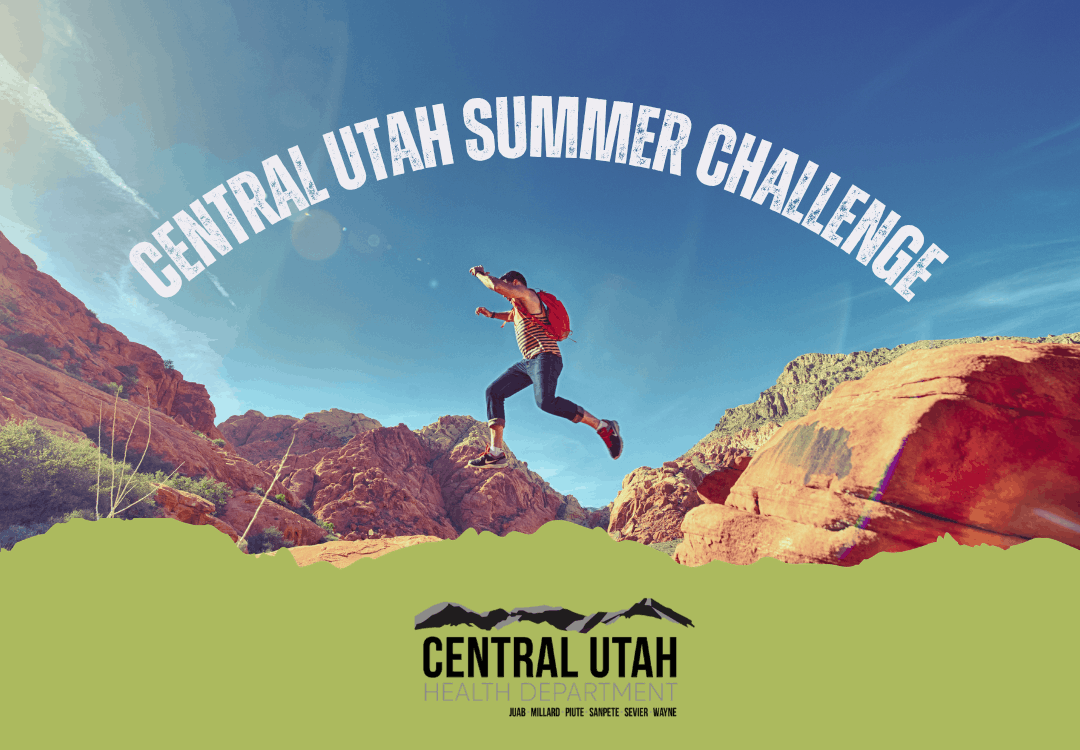
Summer 2025 results: 217 families, 3,417 submissions, six counties unified into one program across distances most engagement campaigns couldn't bridge. The program is running again in 2026, this time with local businesses creating their own sponsored Missions that drive foot traffic while donating prizes back to participants.
What CUHD figured out is that distance isn't the problem, design is. The traditional approach assumes a central hub and asks the community to come to it. CUHD inverted that. The Missions meet families in their own backyards, but the program structure (teams, leaderboard, shared activity feed) connects families across the six counties into one community. Dispersion stops being a barrier and becomes part of the program's geometry.
Read the full CUHD case study for the design detail.
Pattern 3: Museums & Cultural Institutions — The Visitor Experience Extension
Museums sit in a different part of the engagement landscape than parks or public health, but the underlying design question is the same: build participation rather than just attendance.
The traditional museum metric is the visitor count. A million visitors a year sounds impressive in a press release. It tells you almost nothing about whether those visitors engaged with the collection in ways that produced repeat visits, membership conversions, or community advocacy. A visitor who walked through five galleries in 45 minutes is counted the same as a visitor who came back four times in a year and brought friends. The first is a transaction. The second is participation.
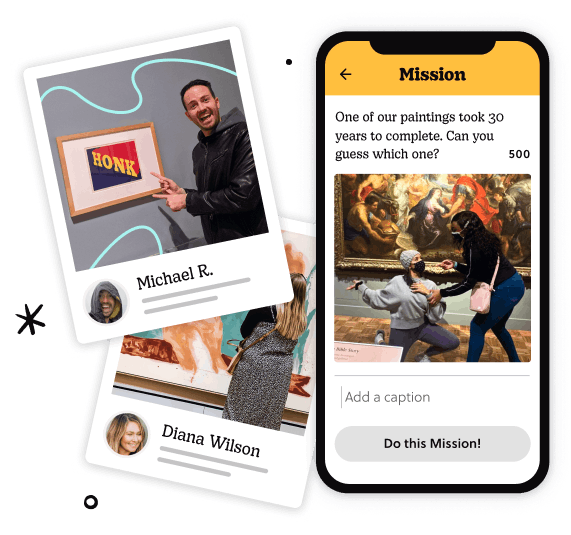
The institutions that have figured this out treat the visit as the beginning of the engagement relationship, not the end. The Detroit Institute of Arts ran an early example of this pattern, designing interactive Mission-based experiences that prompted visitors to look more closely at the collection and make their own personal connections to specific pieces. The Goosechase Experience extended the visit beyond passive observation into participatory exploration. (Read the DIA case study for the specifics; the program ran during 2022.)
Pattern 4: What's Next for Libraries, Civic Engagement & Tourism
Three more public institution categories where the same principles apply:
Libraries. Circulation metrics are the library world's version of the museum visitor count. They measure transactions. The institutions building durable engagement are designing library programming as participation infrastructure: reading challenges that compound year over year, community storytelling projects, programs that connect patrons across branches.
Civic engagement and municipal government. Voter turnout, public meeting attendance, and resident survey response rates are all attendance metrics. The campaigns and municipalities that build durable civic engagement design for participation instead. One 2025 NYC mayoral campaign ran a citywide scavenger hunt as part of its organizing strategy: the team printed 500 participant cards expecting a modest turnout, and thousands of New Yorkers showed up across the route. The pattern translates to public input processes that feel like contributions rather than approvals, or advocacy programs that turn one-time signatures into ongoing involvement.
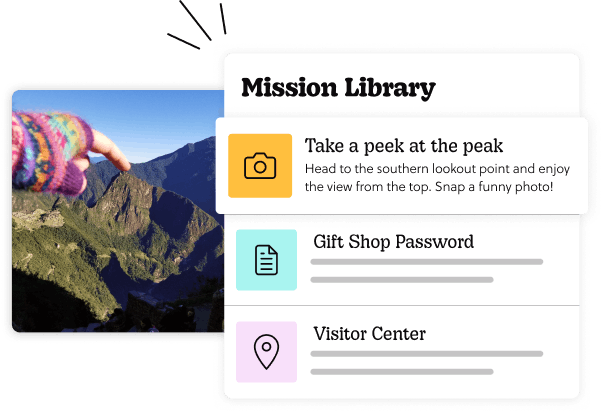
Tourism boards and destination organizations. Visitor counts and hotel room nights are the standard metrics. The destinations building durable tourism design for participation: campaigns that turn visitors into storytellers, ambassador programs that mobilize past visitors as advocates, multi-stop experiences that extend a single trip into ongoing connection with the place.
Why These Programs Work
Across the patterns, four design principles separate the institutions that build durable engagement from the ones that produce attendance metrics:
- Design for repeat participation, not peak attendance. A 500-person program that compounds is more valuable than a 5,000-person event that doesn't.
- Build for the audience you have, not the one you wish you had. CUHD's audience couldn't drive 320 miles, so CUHD didn't design for one that could.
- Measure depth, not just count. Repeat participation, time on program, content created, year-over-year retention. The numbers that prove the work is building something.
- Plan for year two from the start. Templates, content libraries, repeatable structures. The investment that pays back in year three.
For the broader strategic frame on participation-first design, see our nonprofit engagement strategy playbook.
Where to Start
If the patterns above resonate and you're trying to figure out what a participation-first program could look like for your institution, three concrete moves to consider:
This month: Audit one upcoming program through the participation lens. What are you measuring? What are you optimizing for? Where is the gap between the metric the board sees and the relationships you can feel building?
This quarter: Pick one program and redesign it for repeat participation. Same audience, same general goal, different structure. Build for return rather than for peak. Set up the measurement to track depth, not just count.
This year: Build the institutional infrastructure that makes year two of the program easier than year one. Templates. Content libraries. Volunteer training systems. Documentation. The teams that compound year over year invest in the structure that survives staff turnover and seasonal cycles.
If you'd like to talk through what a participation-first program could look like for your specific institution and community, book a conversation with our team. No pitch deck, just a working conversation about what fits.
Where to Go Deeper
Each of the four patterns above is grounded in real institutions doing real work. Here are a few pieces that go deeper:
- Forest Preserve District of Will County: Take It Outside Challenge →: the four-year compounding program
- The Evolution of Engagement Campaigns →: how Forest Preserve's program matured year over year
- Central Utah Health Department: Summer Health Challenge →: the dispersed-audience pattern in practice
- Detroit Institute of Arts case study →: an early example of museum visitor experience design
- Budget-friendly engagement tools for cultural institutions →: practical guide for museums and tourism organizations
- Technology's impact on visitor experience →: the strategic case for interactive engagement
- Turning your museum into an Experience →: design principles for cultural institution engagement
- The Nonprofit Engagement Strategy Playbook →: the broader strategic frame on participation-first design
If you'd like to start building one of these patterns for your institution, start a free Goosechase Experience. No credit card, no commitment.