
Daily Question of the Day Ideas to Boost Team Engagement and Connection
There's a good chance your team has sat through a meeting that started with "Alright, let's do a quick icebreaker," followed by an awkward silence and someone reluctantly admitting their favorite movie is something they're now embarrassed by. It's not that people don't want to connect. It's that the format doesn't give them a real reason to.
A question of the day is one of the simplest, lowest-lift tools you can use to change that. When it's done well, it creates genuine moments of connection, sparks conversations that wouldn't otherwise happen, and builds a team culture where people actually know each other. Done poorly, it becomes another forgettable Slack message that gets a thumbs-up emoji and nothing else.
This guide covers how to use a daily question intentionally: what makes a great question, how to build a sustainable habit, what to do with the answers, and how to take the concept further when you're ready. Whether you're managing a remote team, running a classroom, organizing a community group, or planning events, there's a version of this that works for you.
Why the Question of the Day Actually Works
The science behind it isn't complicated. People build connection through self-disclosure, and self-disclosure happens when there's a low-stakes, structured prompt to make it feel natural. A well-placed question removes the awkwardness of "getting to know you" by giving everyone the same starting point.
What makes a question of the day different from a one-off icebreaker is the repetition. When it becomes a daily or weekly ritual, it stops feeling like a forced activity and starts feeling like part of how the group operates. People begin to look forward to it. They start to notice patterns in how their colleagues think. They find common ground they never would have discovered in a status update meeting.
For remote and hybrid teams especially, this kind of low-friction touchpoint fills a gap that in-person offices often don't even notice they have: the casual, incidental conversation that happens in hallways and kitchens and doesn't happen over video calls. A consistent question of the day creates a virtual water cooler of sorts, without requiring anyone to be in the same room.
What Makes a Great Question of the Day
Not every question does the job. The difference between a question that sparks a real conversation and one that gets a one-word answer usually comes down to a few things.
It should be easy to answer, but not shallow. "What's your favorite pizza topping?" gets participation because it's low stakes, but it doesn't tell you much about the person. "If you could have dinner with anyone from history, who would it be and what would you order?" is still fun and accessible, but it reveals values, curiosity, and personality. That's where connection actually builds.
It should be specific enough to avoid paralysis. Broad questions like "What's something you like?" don't work because they're too open. People don't know where to start. A focused prompt, even a slightly unusual one, gives people a clear entry point.
It should vary in tone and topic. A good question rotation moves between light and personal, funny and reflective, work-adjacent and completely unrelated to work. If every question is "tell me about a professional challenge," people disengage. If every question is "pineapple on pizza: yes or no?", it never goes deeper. You need both.
It should feel safe. Questions that require vulnerability or political opinions, or that might single out people based on their background or circumstances, can do more harm than good. The goal is inclusion, not pressure.
30 Question of the Day Ideas to Get You Started
You don't need a bank of hundreds of questions. You need a solid rotation that keeps things fresh. Here's a mix to pull from:
Light and Fun:
- What's a movie you've watched more than three times and would watch again tomorrow?
- If you could only eat one cuisine for the rest of your life, what would it be?
- What's the most useless skill you have that you're secretly proud of?
- What's a TV show you'd recommend to anyone, no matter their taste?
- What's something you believed as a kid that turned out to be completely wrong?
Creative and Revealing:
- If you had to teach a class on something, what would it be?
- What's a book, podcast, or article that changed how you think about something?
- If you had an unexpected free afternoon this week, how would you spend it?
- What's something you've always wanted to learn but haven't started yet?
- What's the best piece of advice you've ever received?
Work-Adjacent (Without Being Boring):
- What's one thing that makes you feel like you're doing your best work?
- What's a tool, habit, or routine that you couldn't work without?
- What's something you were nervous to do at work that turned out fine?
- What's one thing you wish you'd known when you started your current role?
- What's a win, big or small, that you had this week?
Thought-Provoking:
- What's a skill that you think everyone should learn at some point?
- If you could live in any time period for one year, when would you choose?
- What's something that most people get wrong about your job or field?
- What's a habit you've built that's had a bigger impact than you expected?
- If you could change one small thing about how your team works, what would it be?
Seasonal and Timely:
- What's something you're looking forward to this month?
- What's a tradition, yours or someone else's, that you love?
- What's the most memorable trip or adventure you've taken?
- What's something new you've tried recently that surprised you?
- What's a goal you set earlier this year that you're still working toward?
Mix and match based on where your group is in the week, the season, or the energy of the moment. Monday questions can be lighter. End-of-week questions can be slightly more reflective.
How to Build a Sustainable Daily Question Habit
The biggest failure mode for question of the day programs is inconsistency. Someone runs it for two weeks, misses a few days, and it quietly disappears. To avoid that, build the habit into a structure, not a person's memory.
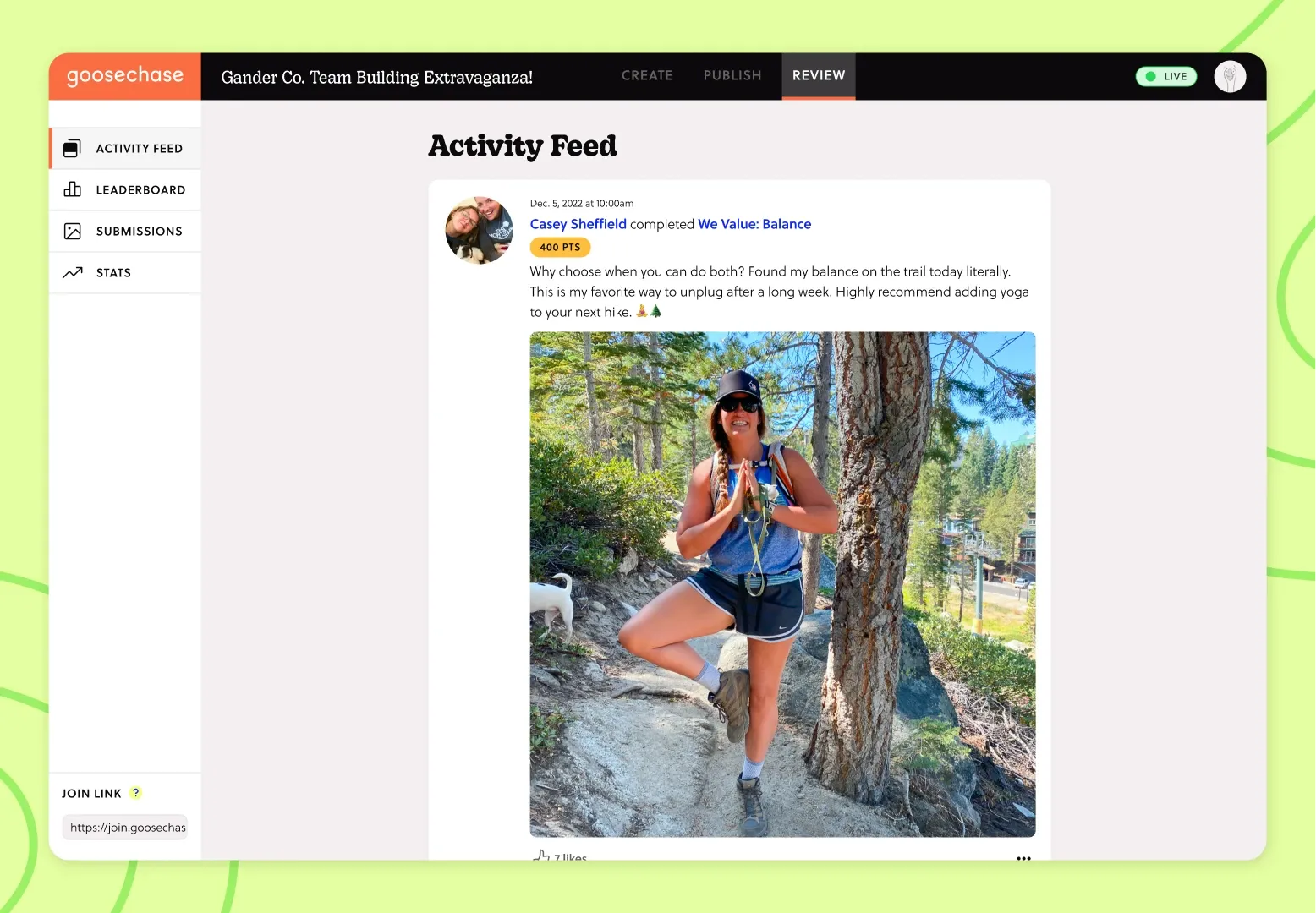
Pick a channel and stick to it. Whether it's a Slack channel, a Microsoft Teams thread, a Goosechase Experience, a classroom board, or a newsletter, choose one place and post there consistently. With Goosechase, you can turn your daily question into a Mission, giving participants a dedicated space to respond. The platform matters less than the consistency, but some platforms do more with the answers than others.
Set a fixed time. Morning questions tend to work well for teams because they can serve as a gentle warm-up before the workday ramps up. For classrooms, the start of a session is natural. For communities, early in the week often gets more engagement than mid-week posts.
Make it easy to respond. If answering requires clicking through to a form or logging into something new, participation drops. Keep the question in the channel where people already are. Ask them to reply directly.
Give people a reason to engage with each other's answers. The question on its own creates a moment. But when people start replying to each other's answers, that's when real connection forms. You can model this by responding to a few answers yourself, or by creating a space where reactions and replies are encouraged.
Rotate who posts the question. Once the habit is established, consider passing the question to different team members on a rotating basis. It gives people ownership, reveals more about each person's personality, and takes the load off any single coordinator.
What to Do With the Answers
Most question of the day programs stop at the question. That's a missed opportunity. The answers are where the real value lives, and there are a few ways to get more out of them.
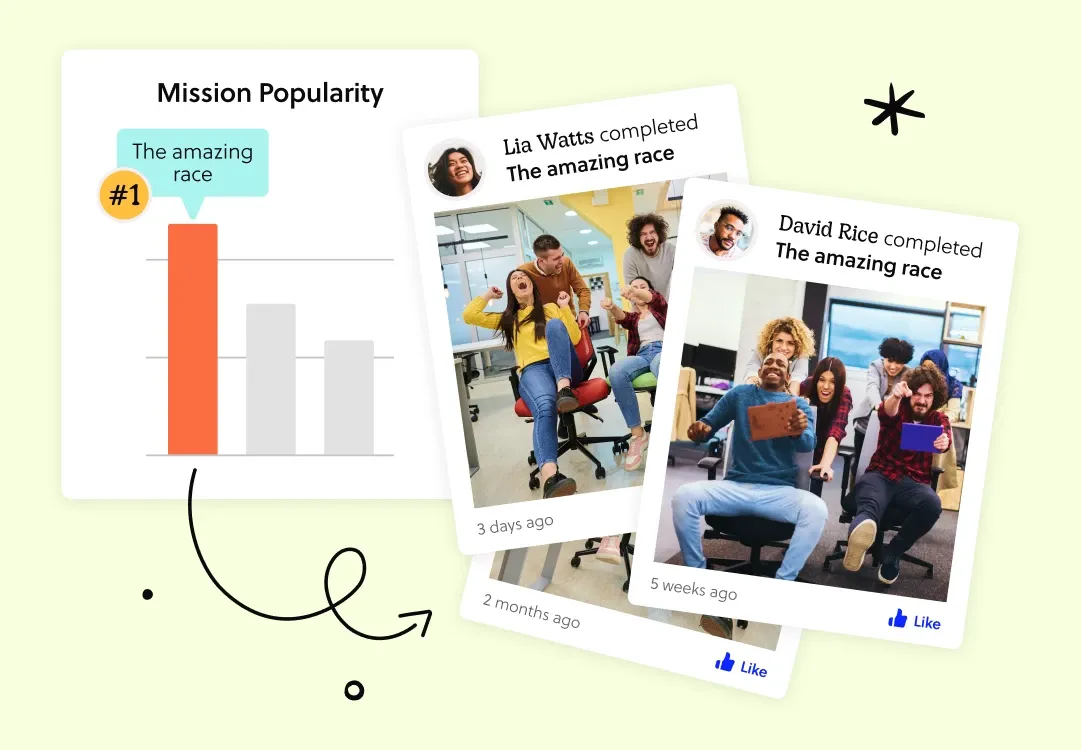
Surface patterns and commonalities. If you notice that five people all want to learn the same skill, or that half the team is interested in the same topic, that's useful information. It could inform a team learning session, a shared resource, or just a conversation that brings people together.
Celebrate individual answers. When someone shares something particularly interesting, surprising, or funny, acknowledge it. A simple "I had no idea you knew how to do that" or "that's actually a great idea" goes a long way. People share more when they feel like their contributions are noticed.
Use answers to inform future questions. If a question about side projects sparked an unusually high level of participation, that's a signal. Follow up a few weeks later with a related question that goes a bit deeper.
Keep a running record. Over time, a log of questions and answers becomes a kind of team archive. It's a low-key way to document culture, celebrate growth, and give new team members a window into who everyone is.
Taking It Further With Interactive Experiences
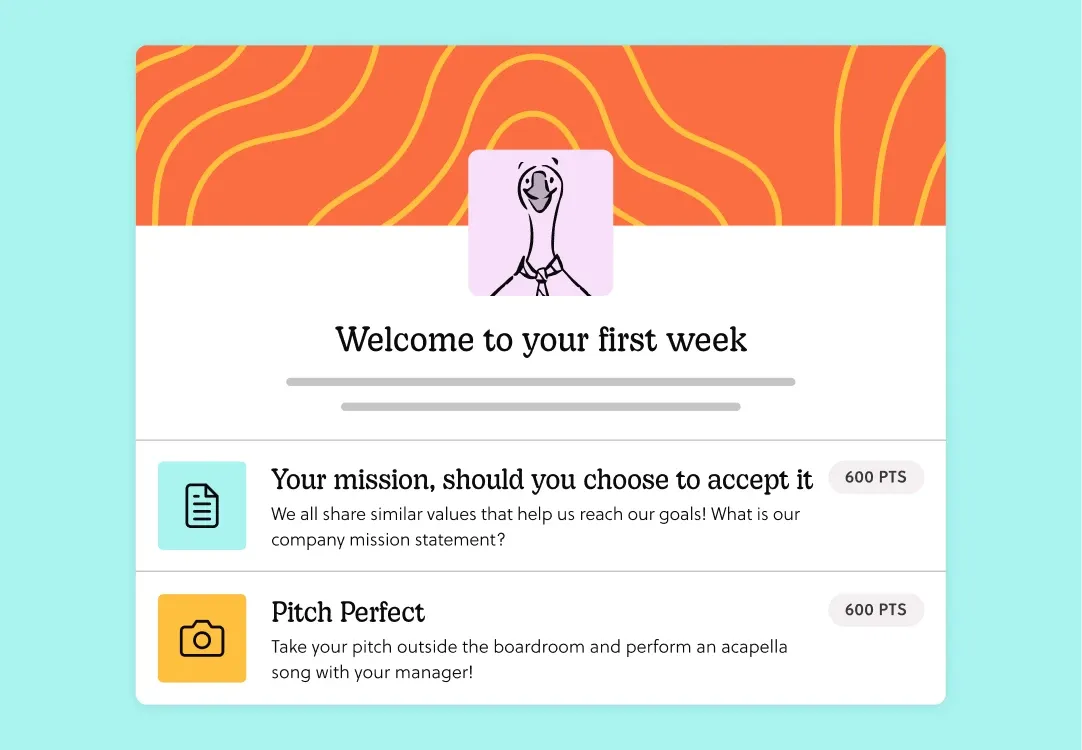
A daily question is a great start. But if you want to take team connection from a daily habit to something that genuinely builds community, Goosechase is worth knowing about.
We're an Interactive Experience Platform (IXP) that turns passive engagement into real participation. Instead of asking your team a question and reading the answers, you can build a full interactive Experience where participants complete Missions that involve photos, videos, real-world challenges, and yes, thoughtful questions, all in one place. It's a format that works for team building, onboarding, events, school programs, community activations, and more.
A Goosechase Experience takes everything that works about a question of the day and multiplies it. Participants aren't just answering, they're doing, sharing, discovering, and collaborating. The Leaderboard keeps energy high. The Activity Feed lets everyone see what their teammates are up to. And the whole thing runs on a platform that's easy to set up and even easier to participate in.
If your daily question habit is working and you're wondering what comes next, an interactive Experience is the natural progression.
Wrapping Up: Start Small, Stay Consistent
A question of the day doesn't need to be complicated to work. Pick a good question, post it somewhere your team already is, and show up consistently. Over time, those small moments of connection compound into something bigger: a team that knows each other, communicates more openly, and actually enjoys working together.
Start with the question bank in this post. Build a rotation that fits your group's tone. Make it a ritual, not a chore. And when you're ready to go further, we're here to help you build something they'll genuinely look forward to.
Ready to build interactive Experiences your team will actually love?