
Volunteer Orientation: A Practical Guide to Onboarding That Improves Retention
A volunteer's experience of your organization starts the moment they first hear about your cause. By the time they show up to their first shift, they've already formed an opinion about what kind of team you are. The question is whether your orientation reinforces that impression or undermines it.
Most nonprofit volunteer orientations are information dumps. Forms, policies, schedules, a tour of the office, maybe a slideshow about the mission. By the end, the volunteer knows your address but doesn't yet feel like they belong. That gap, the one between being informed and feeling like part of the team, is where retention quietly leaks out. Volunteerism is on the rise, but retention rates are decreasing. People are showing up. They're just not staying.
This guide covers what a thoughtful volunteer orientation should accomplish, how to design one that works, and a free template you can copy to your account today.
Why Volunteer Orientation Matters More Than Volunteer Training
Volunteer orientation and volunteer training often get used interchangeably. They shouldn't be. Training is the what (the specific tasks, processes, and tools a volunteer needs to perform their role). Orientation is the why and the who (the emotional connection to your cause, the relationships with fellow volunteers, the sense of belonging that determines whether someone stays past their first month).
You can train a volunteer in a few hours. Orienting them takes a little longer, because what you're really doing is welcoming them into a community.
Done well, a thoughtful volunteer orientation should help volunteers:
- Feel welcome, comfortable, and part of the team from day one
- Deepen their understanding of and connection to your organization's vision, mission, and culture
- Build relationships with fellow volunteers and staff
- Build confidence in the organization and its leadership
The retention payoff comes from the third and fourth bullets, not the first two. Volunteers who feel connected to people stay. Volunteers who only feel connected to a cause are one bad shift away from finding a different cause.
What Good Volunteer Orientation Includes
The best volunteer orientations cover four areas, regardless of organization size or volunteer role.
1. A genuine welcome
Not a logistics handoff disguised as a welcome. A real one. New volunteers should leave their first interaction with your team feeling like they were expected, not just processed. This means someone greeting them by name, a clear introduction to the people they'll be working with, and a small but real gesture (a name tag, a welcome packet, a designated buddy) that signals "we were ready for you."
2. A clear connection to the mission
Volunteers signed up because something about your cause resonated. Orientation is the moment to deepen that resonance. Share stories of real impact (not abstract statistics). Show them the people your work serves, when appropriate. Let them hear directly from staff or longer-tenured volunteers about why this work matters. The connection they form to your mission during orientation is what they'll draw on when they're tired or considering whether to come back.
3. Practical clarity about what comes next
Volunteers leaving orientation should know exactly what their first shift looks like, who they'll be reporting to, where they need to go, what they should bring, and who to contact if they have questions. Vagueness here is one of the most common reasons new volunteers don't return for shift two. The fix is to make the next 7-14 days completely transparent before they leave the room.
4. A way to build relationships fast
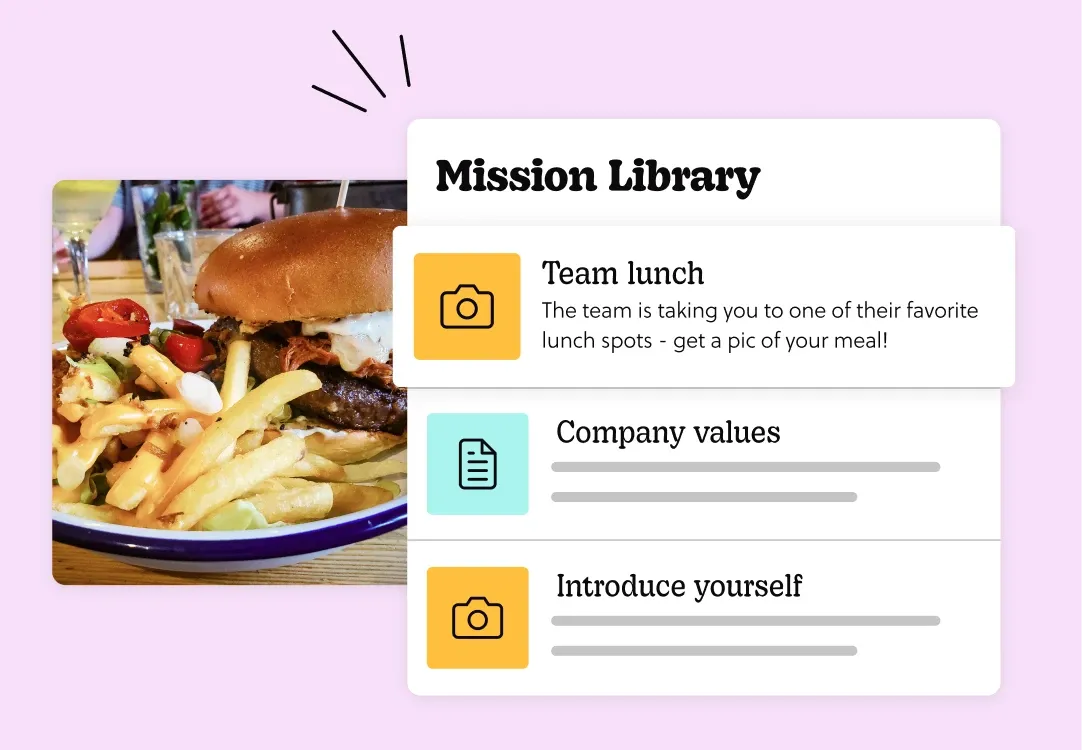
This is the piece most orientations skip. Volunteers don't just need to know the organization. They need to know the people. The fastest way to build those connections is to design moments of interaction into orientation itself. A team-based scavenger hunt, a "meet the staff" challenge, a group activity that pairs new volunteers with seasoned ones. The connections built in those first few hours are what bring volunteers back week after week.
How To Design Orientation That Engages
Even a well-designed orientation can flop if the format doesn't match how people learn. A few principles that consistently work across nonprofit volunteer programs:
Make it active, not passive. A 90-minute slideshow is the format most likely to lose your volunteers. Replace lecture sections with activities that ask volunteers to do something: meet a team member, find a specific resource, share something about themselves. This matters especially for younger volunteers who expect interaction rather than lecture. The Listicle on interactive engagement ideas for nonprofits covers this pattern in more depth (Idea 6 specifically is about gamifying volunteer onboarding).
Pair learning with shadowing. Don't just tell new volunteers what the work looks like. Show them. Better yet, pair them with a more experienced volunteer for their first shift. The institutional knowledge transfers faster, and the relationship-building happens naturally.
Break content into small steps. A 50-page volunteer manual handed to a new recruit is a recipe for that manual to be quietly recycled the next day. Break the same content into 3–5 minute learning steps, distributed over the first week or two. Volunteers absorb more, retain longer, and feel less overwhelmed.
Build in real-time check-ins. New volunteers will have questions they didn't think to ask in their first hour. Schedule a quick 15-minute check-in at day 7 and day 30. Those check-ins are also where retention concerns get caught early.
Celebrate moments along the way. Recognition doesn't have to wait until the one-year volunteer anniversary. Acknowledge milestones during orientation itself: completing the first Mission, meeting the first teammate, finishing the first shift. Small celebrations compound into a sense of momentum.
A Free Volunteer Orientation Template You Can Use Today
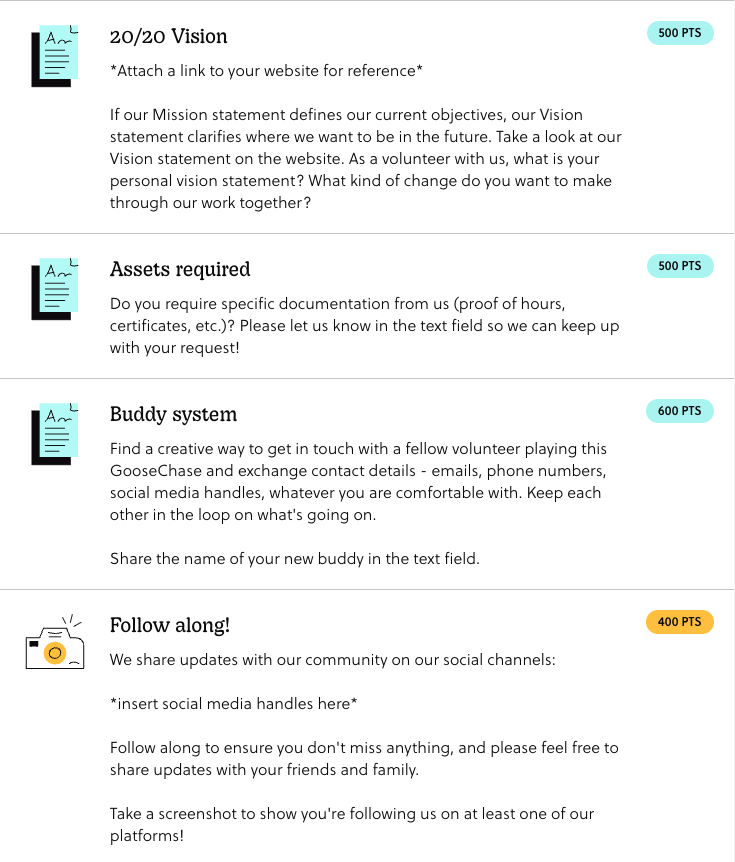
We've built a free orientation template you can copy directly into your Goosechase account. It includes Missions for volunteers to:
- Get to know each other and your organization
- Meet key staff and team members
- Tour your facilities (in person or virtually)
- Complete required paperwork and contact details
- Share their schedule availability
It's designed to be customized for your organization's specific needs. The structure handles the "information dump" parts of orientation (forms, policies, logistics) as engaging Missions rather than as a sit-down session, which leaves your in-person orientation time free for the relationship-building work that drives retention.
If you're already using Goosechase to run Experiences, click below to copy the template to your account.
Here's a sneak peek:
Take a look at our How It Works page to see how easy it is to get started, or start a free Experience (no credit card, no commitment).
What Good Orientation Looks Like in Practice
Several nonprofits we work with have used Goosechase to redesign their volunteer orientation around the principles above:
- BAYADA Home Health Care designed team-based participation where staff supported clients through Missions, building the kind of working relationships that translate directly into ongoing engagement. Read the BAYADA case study →
- The Forest Preserve District of Will County built engagement programs that compound year over year, with their volunteer base showing the same 80%+ retention pattern that drives their broader community engagement work. Read the Take It Outside Challenge case study →
For more on the patterns these and other nonprofits use, see our roundup of five nonprofits getting community engagement right.
Going Deeper
If you're early in evaluating whether interactive Experiences fit your nonprofit's needs, our buying guide for nonprofits choosing an engagement platform walks through the six questions worth asking before you commit.
For the broader strategic frame on volunteer engagement and the supporter lifecycle, our nonprofit engagement strategy playbook is the natural next read.
What is Goosechase?
At Goosechase, experience is everything. Originally inspired by scavenger hunts, Goosechase is an online platform that enables organizations and schools to engage, activate, and educate their communities through delightful interactive experiences. Sign up and try creating a free recreational Experience, or check out our Pricing!