The Play Conference Refuses to Leave Engagement to Chance
If your whole conference is built around the power of play, you can't show up with a clunky, joyless tech stack. When play is the point, your attendee engagement tool better keep up!
That's the challenge Kristy Anderson and Claire Jenness face every year as they run the US Play Coalition's Play Conference, a gathering hosted at Indiana University that brings together early childhood educators, park designers, mental health professionals, librarians, life coaches, and anyone else who believes play is serious business. For three years running, they've used Goosechase to make sure the conference experience matches the conference mission, and the results keep getting better.
Wait, what's Goosechase?
Goosechase is the interactive experience platform that turns passive attendees into active participants. Organizers build a set of Missions, things like visiting a sponsor booth, finding a room, or submitting a question, and participants complete them with photo, video, and text proof to earn points. All on a live leaderboard, with an activity feed of everyone's contributions. Once you build it, it runs itself.
The Conference That Couldn't Afford to Be Boring
The Play Conference is not a typical academic gathering, with attendees spanning all industries and disciplines. What binds them is a shared conviction that play matters, and they arrive expecting the conference itself to embody that.
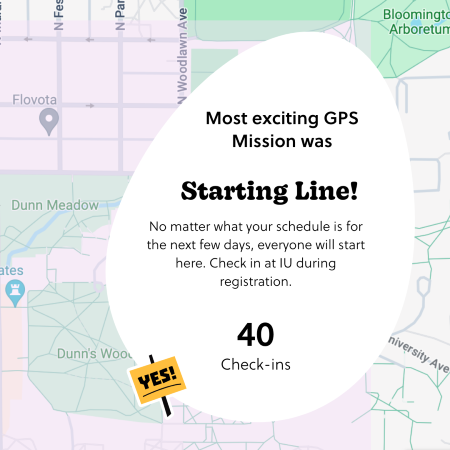
The organizing team is small. Kristy and Claire run the event with about four people total, not all of whom are onsite for the full conference, on a tight nonprofit budget. Their venue, Indiana University in Bloomington, is beautiful, but can be genuinely hard to navigate – full of winding hallways, escalators, and rooms that take a first-timer most of day one to locate.
Alongside the campus’ logistical puzzle was a bigger challenge: relationship-building - the thing attendees said they valued most - was happening in the margins, not by design. For a conference dedicated to the value of play, that felt like a missed opportunity.
They needed an engagement platform that could:
- Fix the wayfinding,
- activate sponsor relationships,
- and get people talking to each other...
all without requiring anyone on the small staff to babysit it in real time.
Those are not niche problems.
The Right Conference Tool for the Right Culture
When Goosechase first came to the Play Conference, the fit was immediately intuitive. As Kristy reflected on why it has worked year after year:
"The smart playfulness of the Goosechase app really mirrors our conference culture...if it wasn't fun, it would have a real detrimental effect on our event".
That cultural match is a genuine part of the story, but what made Goosechase earn its place year after year was what it actually solved:
- Helping people navigate a complicated building
- Driving real interaction with sponsors
- Running the whole Experience without organizers needing to watch the clock
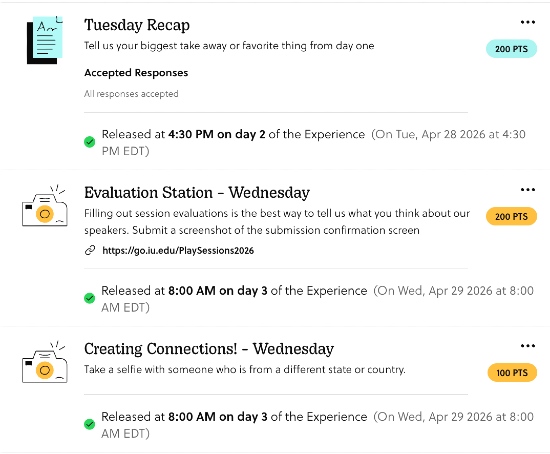
Three Days of Conference Activities, Built Two Weeks Out
By year three, Kristy and Claire have gotten SO creative with what Goosechase can do to make their conference more engaging.
Goosechase Missions were woven directly into conference programming, with attendees earning points for:
- Sponsor engagement: driving real interaction with sponsors and learning something specific from each one
- Activity participation: engaging with the people leading sessions in the Play Hub, a dedicated space for hands-on activities
- Session evaluations: uploading a screenshot of their completed eval to earn points, turning a routine administrative ask into a moment of participation
The team also used Missions for wayfinding in a way that paid off beyond simple directions. Early Missions sent attendees to locate key rooms before they actually needed to be there. The result was something no sign could recreate:
"When I heard people in the hallway going, 'Do you know where this is?' someone would say, 'Oh yes, I did that Mission, I can take you there.' We already had planted experts in our groups." — Claire Jenness
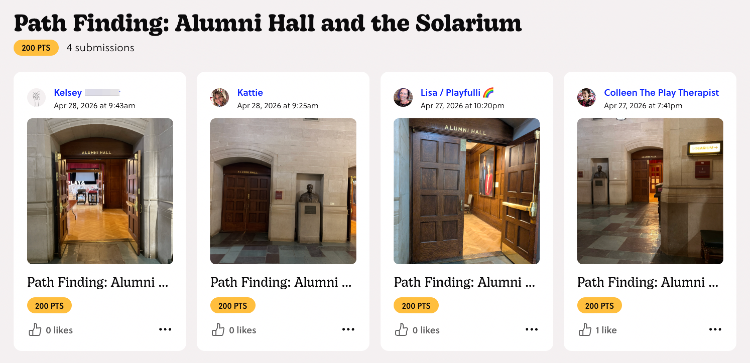
The accidental peer-to-peer network of building navigators was not something anyone planned for. It happened because the Missions gave people a shared experience before the formal programming even started.
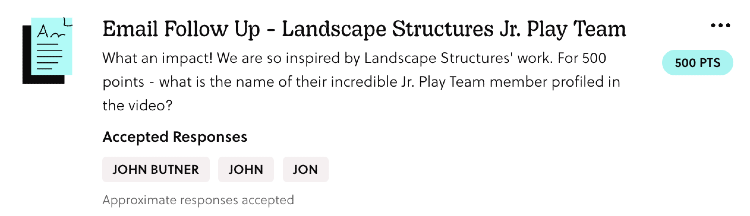
Then there was the day a sponsor's video failed to load during lunch. Rather than send a flat follow-up email, Kristy pushed a bonus Mission the next morning: watch the video, name the person in it, earn 500 points.
"I would otherwise just be sending an email. You don't really know the impact of an email, so it's nice to link Goosechase Mission engagement with key conference information." — Kristy Anderson
The sponsor got their moment. Attendees got a reason to engage. A tech glitch quietly became a touchpoint.
What the Numbers (and the Hallways) Showed
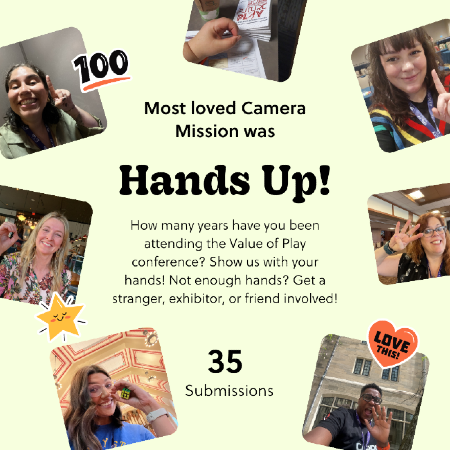
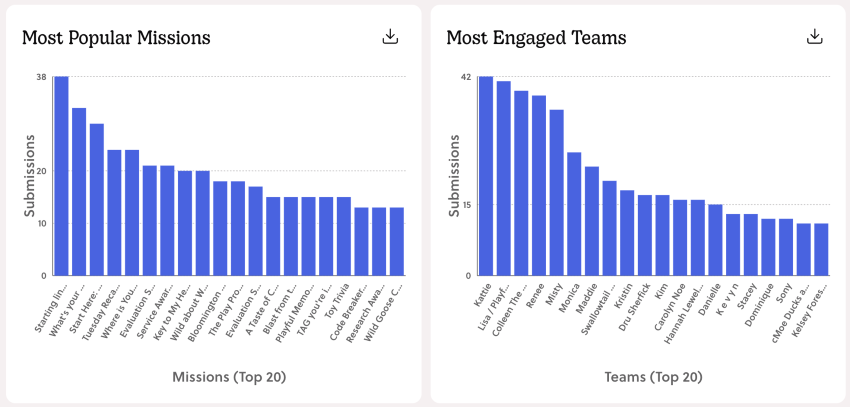
In year 3, 52 active participants generated over 500 Mission submissions across three days. The team locked day-specific Missions to prevent point-sniping, and while completion naturally slowed mid-week, Kristy had a generous read on why: "That's also the time when people are starting to get to know each other and chat more in-person."
One of the more surprising patterns was that new attendees consistently ranked among the top performers, with first-timers landing near the top of the leaderboard. Missions gave newcomers a structured, low-pressure way to get their bearings and meet people. The game, it turned out, lowered the barrier to belonging.
The other thing that kept coming up: reliability. In three years of running the experience, Kristy has never had a platform issue during a live event.
"I have never, before an event or during an event, had a glitch or issue. In three years, there's never been some sort of technological issue."
She was the first to admit that's not the most exciting outcome to report. But for a small team running a live event, peace of mind is its own feature.
Tips From Three Years of Conference Play with Goosechase: “Oh, they’re into it.”
Kristy and Claire's advice for other event organizers is practical and hard-won:
- Make more Missions than you think you need. People are more competitive than expected (with or without prizes!), and running out mid-conference means building new ones under pressure.
Claire remembers when she realized multiple participants had blown through what was built: "Oh, they're into it. We had to make more [Missions].”
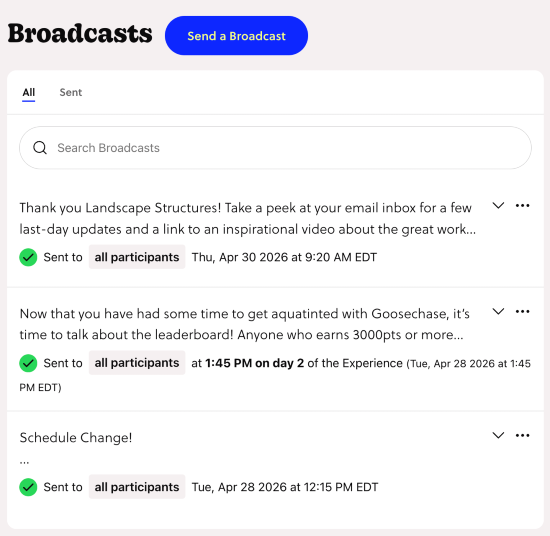
- Build in timed releases well ahead of the event. Missions can be scheduled to open at specific moments, so the Experience unfolds alongside the program without extra management.
- Connect every Mission to something real. Session evals, sponsor visits, venue navigation, Q&A collection. If a Mission ties to something already happening at the event, it does double the work.
- Think of it as infrastructure, not just entertainment. As Kristy put it: "My biggest recommendation is aligning everything so that it's not a standalone that doesn't interact with what's occurring during the event."
Play Is the Point. Participation Is the Proof.
What the US Play Coalition's Play Conference has built over three years is a model that travels well. The problems they solved show up at conferences everywhere. When the Missions are purposeful and the Experience is designed to do real work alongside the programming, attendees don't just show up: they participate, connect, and come back.
What is Goosechase?
At Goosechase, experience is everything. Originally inspired by scavenger hunts, Goosechase is an online platform that enables organizations and schools to engage, activate, and educate their communities through delightful interactive experiences. Sign up and get started with a free Experience, or check out our Pricing!