How to Make a Scavenger Hunt: From Classic Clues to Digital Adventures
At its core, a scavenger hunt challenges participants to find items on their list, solve puzzles, decode riddles, and follow clues to reach specific locations or discover hidden goodies. The entire scavenger hunt experience depends on well-crafted challenges that keep hunters engaged from start to finish.
Traditional scavenger hunts often stow physical clues around a space, perhaps tucked inside a loot chest, attached to landmarks, or concealed with invisible ink. Modern digital versions use a hunt app like Goosechase to deliver challenges directly to participants' smartphones, mixing classic treasure hunt elements with interactive technology.
Steps to Create Your Perfect Scavenger Hunt
Whether you're organizing your first treasure quest or your fiftieth, following a structured approach ensures nothing gets overlooked. These essential steps will guide you from initial concept to final execution, helping you design a scavenger hunt that captivates participants and runs smoothly from start to finish.
1. Define Your Theme and Adventure Style
Your theme sets the tone for the entire scavenger hunt. Consider these popular approaches:
- Treasure Hunt: Follow sequential clues leading to a final prize or treasure chest.
- Puzzle Quest: Solve interconnected riddles and ciphers to unlock the next clue.
- Nature Scavenger Hunt: Explore outdoor environments, finding natural items and landmarks.
- Photo Challenge: Capture specific scenes or complete creative tasks.
- Mixed Adventure: Combine elements from multiple hunt styles for variety
Kids love themes like pirate search-and-find games or mystery journeys, while adults appreciate sophisticated puzzle challenges or team-building focused hunts. For more inspiration on outdoor adventures, check out our nature and outdoor scavenger hunt Missions.
2. Choose Your Location and Hide Spots
Identify your hunt area - whether indoors, outdoors, or spanning multiple locations. Scout potential concealing spots for clues and a cache. Look for:
- Distinctive landmarks that make good reference points
- Safe, accessible locations for all participants
- A mix of obvious and challenging hiding places
- Natural containers (hollow trees, under benches, behind signs)
- Indoor spots like books, drawers, or furniture
For a nature scavenger hunt, incorporate natural features as part of the hunt; rock formations, specific tree types, or water features become both clues and destinations.
3. Determine Your Clue Strategy
Effective clues balance challenge with solvability. You want hunters to think creatively without becoming frustrated. Consider these clue types:
- Riddles: "I have hands but cannot clap, a face but cannot see. What am I?" (Clock)
- Directional Clues: "Walk twenty paces north from the oak tree, then look beneath your feet."
- Ciphers: Encode messages using simple substitution or Caesar ciphers that participants must decode
- Visual Clues: Sketch landmarks or use photos showing partial views of locations
- Word Search Puzzles: Stow the next location within a grid of letters
- Combination Locks: Require solving math problems or puzzles to unlock boxes containing the next clue
- Invisible Ink: Write messages with lemon juice or special pens requiring a flashlight or heat to reveal
Mix different clue types throughout your hunt to maintain engagement and cater to various problem-solving styles.
4. Creating Effective Clues That Guide Without Giving Away
The art of creating clues lies in providing enough information to solve the puzzle while maintaining challenge. Here are proven techniques:
- Be Specific But Cryptic: Instead of "Find the garden statue," try "Seek the stone guardian where roses grow."
- Use Rhyming Riddles: "Where books stand tall in ordered rows, your next adventure's reward shows."
- Incorporate Wordplay: Puns and double meanings add clever twists
- Reference Shared Knowledge: Use inside jokes or locations meaningful to your participant group
- Layer Difficulty: Start with simpler clues to build confidence, then increase complexity
- Provide Backup Hints: Have additional clues ready if hunters get stuck
Remember to write each clue clearly, even when being cryptic. Poor handwriting or ambiguous wording can frustrate rather than challenge.
Taking Your Hunt to the Next Level with Technology
While good old-fashioned paper clues and hidden rewards create wonderful quests, incorporating digital tools adds exciting possibilities. This is where a hunt app like Goosechase transforms traditional scavenger hunts into interactive experiences.
How Goosechase Works
The platform transforms scavenger hunt planning into a streamlined process:
Step 1: Create Your Experience - Sign up for Goosechase and create a new Experience. Give it a name matching your hunt theme, "Pirate Treasure Adventure" or "Office Mystery Hunt."
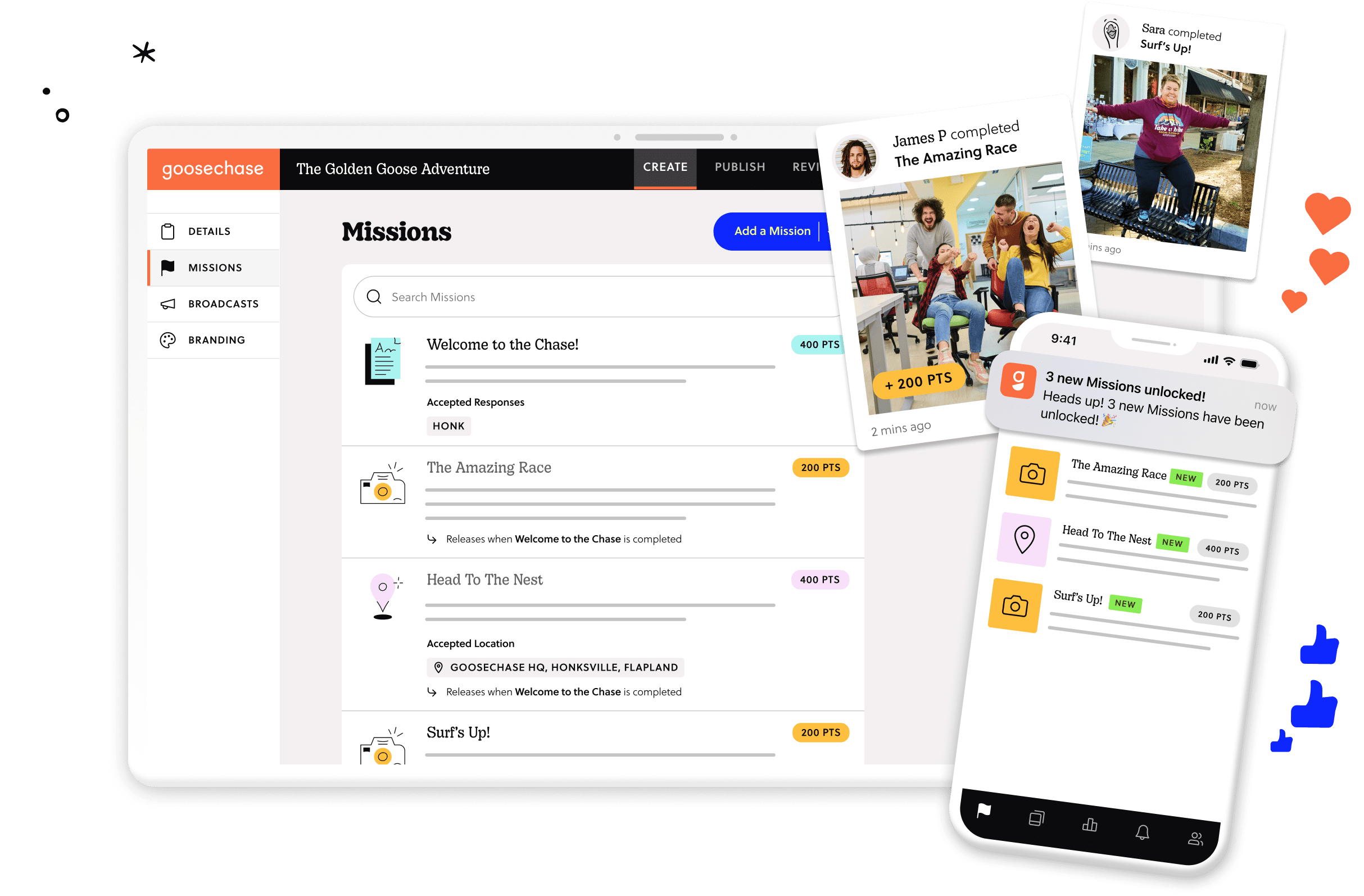
Step 2: Design Your Missions - Add challenges using three submission types:
- Photo/Video: Participants capture images or footage proving they completed tasks
- Text: Perfect for riddles requiring written answers or decoded messages
- GPS Check-in: Verify participants reached specific real-world locations
Step 3: Customize Difficulty - Set point values for each Mission. More challenging puzzles earn more points, creating strategic decisions about which clues to tackle first. Learn more about using unlockable Missions to pace your hunt strategically.
Step 4: Launch and Track - Participants download the free Goosechase app, join using your join code, and start hunting. You monitor progress in real-time through the organizer dashboard.
Step 5: Celebrate Results - The platform automatically tracks leaderboards and submissions, making it easy to announce winners and share memorable moments. You can even customize leaderboard visibility to control the competitive atmosphere.
Incorporating Goosechase Into Traditional Hunts
You don't need to choose between classic treasure quests and digital experiences. Mix both approaches for the ultimate scavenger hunt:
- Hybrid Clue Delivery: Stash physical clues that reveal Goosechase Mission answers to unlock digital challenges
- Photo Verification: Use the app to verify participants found hidden items without requiring them to collect physical objects
- Puzzle Progression: Physical riddles lead to locations where participants must complete Goosechase Missions to get the next clue
- Team Competition: Mix individual physical treasure finding with team-based digital challenges
- Decode Integration: Stow ciphers in real-world locations that participants photograph and decode digitally
This fun twist on traditional hunts appeals to tech-savvy participants while maintaining the physical escapade element that makes treasure hunts memorable.
Great Ideas for Different Scavenger Hunt Types
Not all scavenger hunts are created equal. The best hunts adapt to their environment and audience, using the unique features of each setting to create memorable challenges. Here are proven approaches for various locations and scenarios that will inspire your next quest.
Indoor Scavenger Hunt
Perfect for homes, offices, or buildings, indoor hunts tuck clues strategically:
- Behind picture frames
- Inside specific book pages
- Under furniture cushions
- Taped to mirror backs
- Inside kitchen containers
- Within desk drawers
Use word search puzzles hidden in plain sight or riddles referencing room features to guide hunters through the space. For workplace events, explore our office scavenger hunt template for a ready-made experience.
Outdoor and Nature Scavenger Hunt
Take advantage of natural environments:
- Tree bark patterns as visual clues
- Rock cairns marking spots
- Specific plant species to find
- Wildlife observation challenges
- Geocaching-style GPS coordinates
- Landmarks visible from vantage points
Incorporate environmental awareness by having participants photograph items rather than collecting them, preserving the natural space for others. Find more outdoor Mission ideas tailored for natural environments.
Epic Multi-Location Adventure
For truly ambitious hunts spanning neighborhoods or cities:
- QR codes at landmarks revealing next locations
- Businesses offering clues to cooperative participants
- Public art as puzzle pieces
- Historical markers providing riddle answers
- Multiple teams are racing on different routes to the same treasure
Planning a scavenger hunt that requires traveling between locations needs careful consideration of safety, timing, and accessibility.
The Digital Advantage: Why Use Goosechase
While traditional treasure hunts charm with nostalgia, digital scavenger hunt platforms offer compelling advantages:
- Scalability: Easily accommodate any number of players without hiding dozens of physical clue copies
- Real-Time Tracking: Monitor progress instantly, identify struggling teams, and adjust difficulty on the fly
- Photo Documentation: Automatically collect pictures, creating lasting memories from the hunt
- Flexible Participation: Participants complete Missions at their own pace, ideal for large groups
- Easy Updates: Modify Missions or fix errors without re-hiding physical clues
- Weather Proof: Digital clues won't blow away, get wet, or become illegible
- Automatic Scoring: No manual point tallying or disputed results
- Remote Possibilities: Create hunts that participants can complete from home or various locations
The platform's customizable nature means you tailor every aspect, from Mission descriptions to point values to team structures, ensuring your hunt that requires specific outcomes delivers exactly that.
Ready to Create Your Hunt?
You now know how to craft everything from simple indoor treasure hunts to elaborate outdoor escapades. Start with your theme, develop clever clues that challenge without frustrating, carefully hide each piece of your puzzle, and consider how technology might enhance the experience.
The best scavenger hunt is the one you'll actually run. So grab your riddle-writing hat, scout some hiding spots, get creative with your puzzles, and prepare to send your hunters on an unforgettable expedition. Whether they're solving your cryptic ciphers with pencil and paper or using smartphones to decode digital challenges, they'll treasure the experience you've created.