How Long Should A Scavenger Hunt Be?
"How long should this thing actually be?"
It's the first question almost everyone asks us, and the honest answer is it depends. But after a million-plus Experiences, we've noticed three lengths that work for nearly every situation. Pick the one that matches your event and you're 90% of the way there.
The Quick Answer
| Type | Game-time | Missions | Best for |
|---|---|---|---|
| The Sprint | 30–45 min | 10–20 | Icebreakers, conference breaks, quick energy resets |
| The 10K | 1.5–2 hrs | 20–50 | Team offsites, parties, fundraisers, class periods |
| The Marathon | 2–7 days | 50–100 | Conferences, orientations, marketing activations, long-running campaigns |
Not sure which one fits? Here's the shortcut:
- Running an icebreaker, warm-up, or filling a 30-minute gap → Sprint
- Hosting a team-building afternoon, party, fundraiser, or class period → The 10K
- Powering a multi-day conference, orientation week, month or long campaign → Marathon
Now the detail.
Short Scavenger Hunts: The Sprint
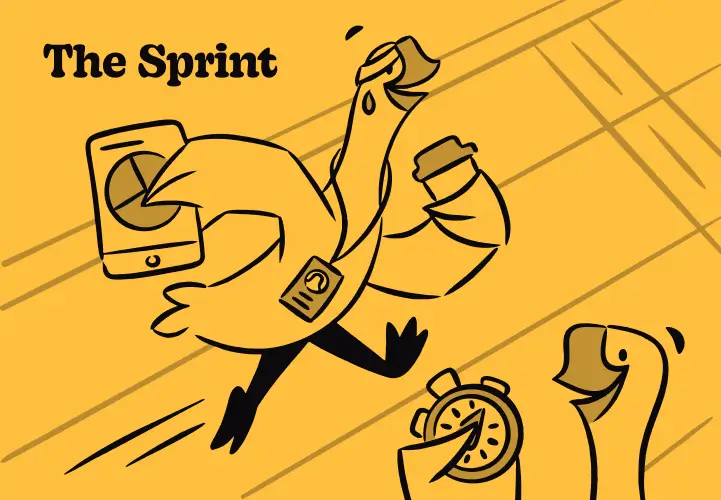
First up: the Sprint. Think of it as the warm-up lap: short, snappy, and impossible to mess up. It shouldn't be the primary focus of a gathering, but if you're looking for a way to shake things up without a lot of time commitment, this is it. Perfect as a conference ice-breaker, a picnic add-on, or a 3pm energy reset at the office.
The numbers
- Game-time: 30–45 minutes
- Setup + wrap-up: ~15 minutes
- Missions: 10–20 quick ones (1–2 minutes each)
- Group size: Works for almost anything, from 6 to 6000
Why these numbers work. Fewer than 10 Missions and people barely warm up before it's over. More than 20 in a 30-minute window and you'll have stragglers when time's up which kills the energy you were trying to build.
Mission mix. Lean heavy on photo and video Missions (roughly 70%). They're fast, social, and produce the funny moments people will replay all afternoon. Skip anything that requires travel or deep thought.
Real example. A K-12 teacher running a Friday review session might build a 15-Mission Sprint with vocabulary recaps, "act out a chapter scene" video Missions, and a bonus team selfie. Forty minutes total, and the class leaves on a high.
Watch out for. Missions that are too complex for the time. If a participant has to leave the room or open a third app to complete it, it doesn't belong in a Sprint.
How to land it. Pull up the leaderboard on the projector, scroll through the funniest submissions live, and crown a winner. Five minutes, max.
Mid-Length Scavenger Hunts: The 10K
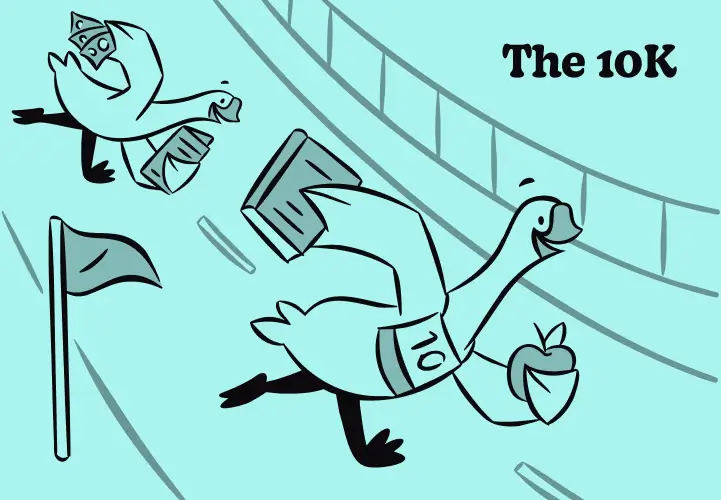
Next we have the 10K. This is a full-on blitz of scavenger hunt glory. When the 10K starts, the scavenger hunt is the gathering: no side activities, no split focus, just go-time. That's not to say it can't sit inside a bigger event, but during that window, it's the main attraction. Think team-building afternoons, weekend games with friends, charity fundraisers, classroom field trips, and orientation activities.
The numbers
- Game-time: 1.5–2 hours
- Setup + wrap-up: ~30 minutes
- Missions: 20–50 with real variety
- Group size: 10–200 works beautifully; bigger is doable with team mode
Why these numbers work. Ninety minutes is the sweet spot where teams get into a rhythm, develop strategy, and start trash-talking the leaderboard. Anything shorter feels rushed; anything longer and energy starts to dip without a built-in break.
Mission mix. Variety is the whole point. A good blend is roughly 50% photo/video, 25% GPS or location-based, 15% text or trivia, and 10% wildcard ("recruit a stranger to do the wave with you"). The mix keeps every team type — the photo crew, the trivia crew, the wildcards — engaged.
Real example. An HR lead planning an afternoon offsite for 60 people might run a 35-Mission 10K across a downtown park: photo challenges at landmarks, a few trivia questions about company history, GPS check-ins at hidden spots, and a closing group photo Mission worth bonus points.
Watch out for. Skipping the briefing. 10Ks fail when teams aren't clear on the rules, the boundaries, or how scoring works. Five minutes of upfront context saves an hour of confusion.
How to land it. Reserve 20 minutes at the end for a live highlights reel. Show the top three submissions per category, announce winners, hand out prizes. This is the moment people remember.
Long Scavenger Hunts: The Marathon
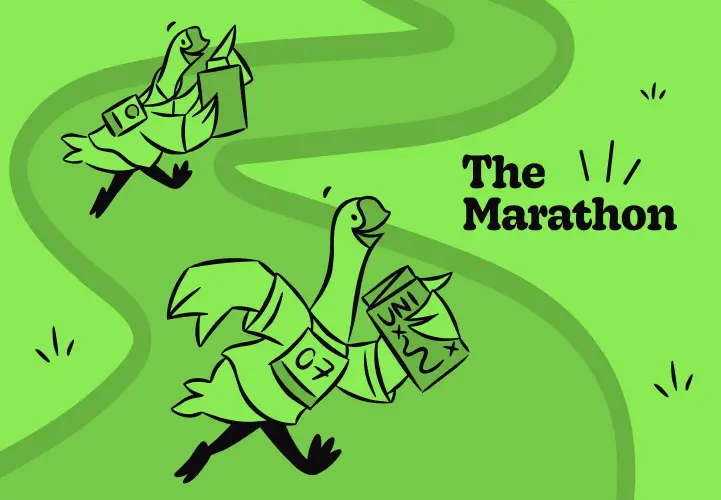
Finally, the Marathon. The slow burn. Marathons aren't trying to dominate anyone's day, they hum quietly in the background of a week-long conference or month-long activation, surfacing whenever someone has a spare minute. The key is finding challenges that keep people entertained and engaged without interfering with their day-to-day. The bonus: you can include more challenging Missions since participants have longer to figure them out.
The numbers
- Game-time: 2–7 days (sometimes longer)
- Setup + wrap-up: A few hours up front, plus daily nudges
- Missions: 50–100 with a real range of difficulty
- Group size: Scales to thousands; the format is built for it
Why these numbers work. Spread across multiple days, you need enough Missions that nobody runs out of things to do, but not so many that the list feels overwhelming. Fifty to a hundred gives people something fresh every time they open the app.
Mission mix. Mix easy daily wins (a quick photo, a check-in) with bigger creative challenges that reward the people who really lean in. Drop in time-sensitive bonus Missions to spike engagement on slow days.
Real example. A university running first-year orientation might launch a 7-day, 80-Mission Ultra-Marathon: campus landmark photos, "introduce yourself to someone in your dorm" Missions, attendance check-ins at welcome events, and a bonus Mission that unlocks only on day four.
Watch out for. Set-it-and-forget-it. The single biggest Marathon mistake is launching the Experience and going silent. Schedule mid-event nudges — a leaderboard update on day three, a surprise bonus Mission on day five — to keep momentum.
How to land it. Build an end-of-game slideshow of the most memorable submissions and share it back with participants. For multi-day Experiences, this recap is half the magic.
Going Longer: Months, Seasons, and Year-Round Experiences
Some Experiences don't end. Community challenges, outdoor exploration programs, employee wellness campaigns, and sustained engagement initiatives can run for months or even years, refreshing Missions over time, building habit, and turning participation into community identity.
The mechanics shift at this scale: random-draw prizes instead of leaderboards, expiring Mission batches instead of one giant list, honor-system verification instead of manual review, and milestone recognition instead of single-winner trophies. The goal stops being "win the game" and starts being "show up, explore, belong."
See it in action: The Forest Preserve District of Will County has run their Be a Trailblazer outdoor Experience for four years and counting. Read how they evolved from a competitive sprint into a sustainable year-round community.
So how long should yours be?
There's no perfect length, only the right length for your group, your goal, and the time you've got. Use Sprint, 10K, and Marathon as starting points, then trust your gut. The best Experiences usually come from organizers who picked a format and made it their own.
For more on planning your next group activity, check out our 3-part guide to organizing an office team-building scavenger hunt.
What is Goosechase?
At Goosechase, experience is everything. Originally inspired by scavenger hunts, Goosechase is an online platform that enables organizations and schools to engage, activate, and educate their communities through delightful interactive experiences. Sign up and try creating a free recreational Experience, or check out our Pricing!